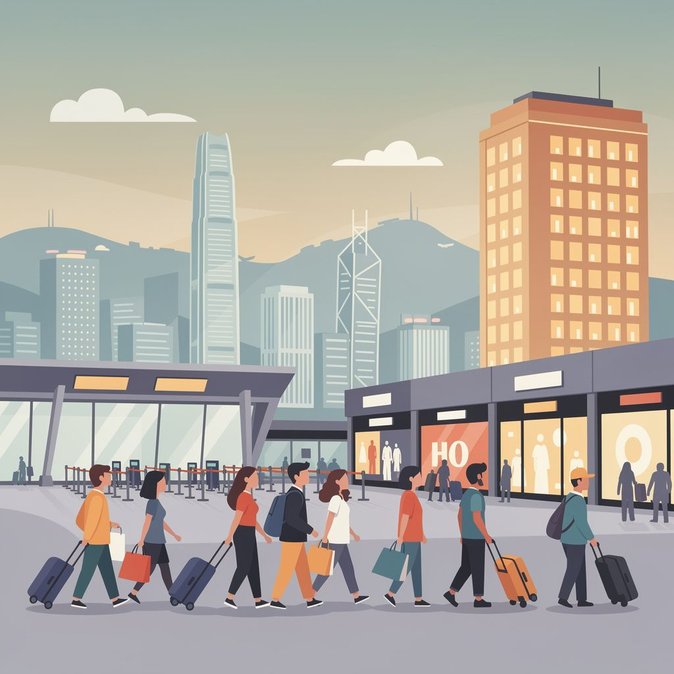
Hong Kong’s tourism and immigration authorities have confirmed that the city handled about 1.6 million arrivals between 1 and 7 October, the peak of mainland China’s National Day “Golden Week”. According to the Immigration Department, 1.41 million of those travellers were mainland residents entering through the city’s seven land, sea and air control points. The Lo Wu and Lok Ma Chau Spur Line checkpoints were once again the busiest, while the West Kowloon high-speed-rail terminus processed an average of 100,000 passenger movements a day. This year’s figure is more than 7 per cent higher than the same holiday period in 2025 and reflects the first fully restriction-free Golden Week since the pandemic. The government attributed the surge to aggressive destination marketing, visa-free entry for 170 jurisdictions, and a newly relaxed e-Channel enrolment policy that lets frequent visitors register on arrival. Industry groups reported an immediate economic dividend. The Hong Kong Retail Management Association said average daily takings in core shopping districts rose 12 per cent year-on-year, while hoteliers recorded occupancy rates above 90 per cent. Business-events organisers also benefited: the Global Sources trade fairs at AsiaWorld-Expo signed on 18 per cent more mainland buyers than last autumn, thanks in part to simplified group-visa processing. For mobility managers, the surge underscores the need to plan cross-border itineraries carefully during Chinese public-holiday peaks. Corporates have been advised to build extra lead-time into travel approvals, encourage employees to use less-congested control points such as Shenzhen Bay, and take advantage of the “Contactless e-Channel” pilot now operating at the Hong Kong-Zhuhai-Macao Bridge. Travel-risk teams should also monitor hotel price spikes and potential delays in goods clearance as airport cargo volumes jump in parallel with passenger flows.
Source: news.gov.hk