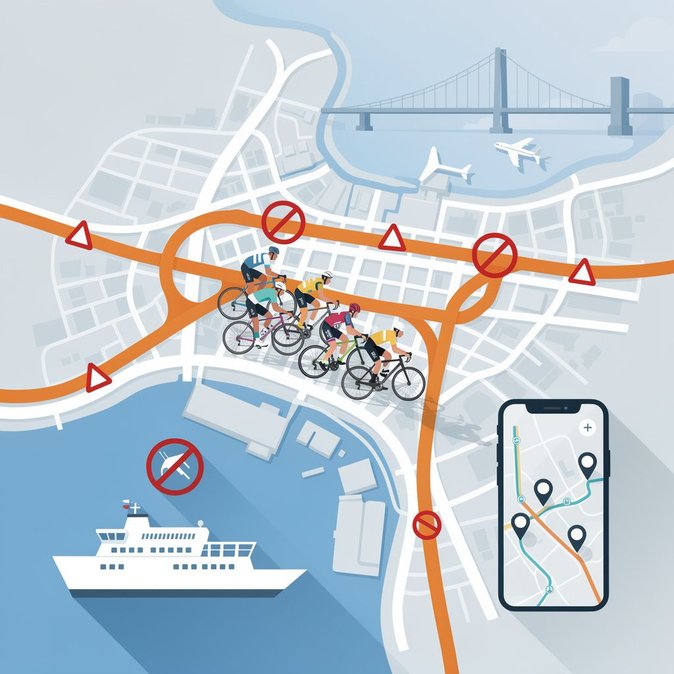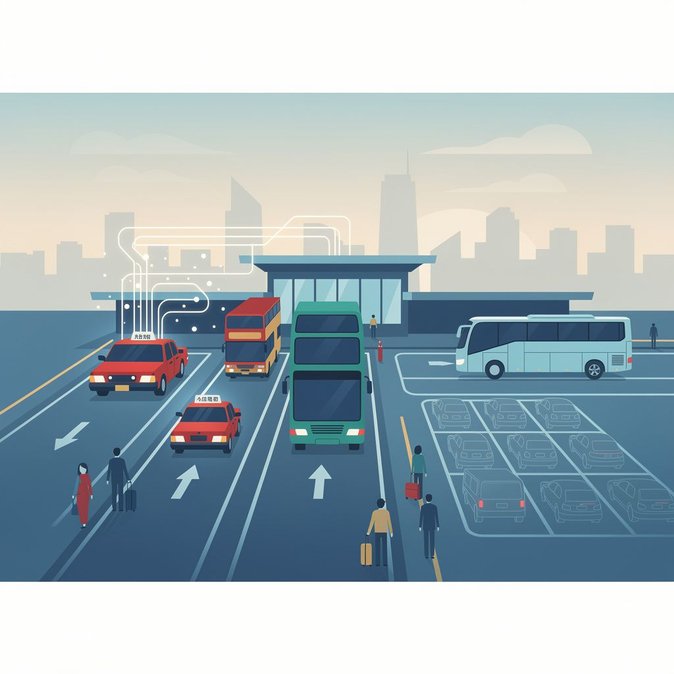
Hong Kong’s Transport Department has released a 2,000-word operational playbook for the rebuilt Huanggang Port, which is scheduled to resume round-the-clock passenger service on 12 October. Seven franchised bus lines, six green minibus routes and five cross-boundary coach services will funnel travellers directly from the new port to districts as far apart as Ma On Shan, Kai Tak Sports Park and Central. Dedicated public-transport lanes have been carved out on Fanling Highway and San Tin Highway so that buses can bypass chronic chokepoints near San Tin Interchange, and a buffer area outside the port will hold back-up vehicles that can be dispatched when clearance queues spike. Taxis will operate on a ticketing system: empty urban- and New Territories-licensed cabs must first collect a queue ticket in the buffer zone before heading to the new public-transport interchange, while pre-booked fleet taxis will be summoned electronically to a separate pick-up bay inside the terminal. The department has also installed additional signage, queue rails and service ambassadors to steer first-time users through the sprawling facility. The Emergency Transport Coordination Centre will run real-time dashboards to adjust bus headways and redeploy vehicles where crowd pressure is greatest. Officials are urging travellers to “plan journeys early and avoid rushing to the new port in the first few days of service.” Experience from the 1 October Golden Week holiday, when seven million boundary crossings were logged city-wide, suggests that teething delays are likely during the commissioning phase. The Hong Kong-Shenzhen joint-clearance model means passengers will no longer change levels or re-queue after leaving Hong Kong immigration, but the novelty of the layout may initially slow foot traffic. For mobility managers, the route matrix provides new options for getting assignees from northern New Territories housing clusters into central business districts. Employers should update travel policies to reflect the bus codes (e.g., B13 for Hong Kong Island eastbound commuters) and remind staff that some lines run only at peak hours. Ride-hailing operators are expected to geo-fence pick-ups to the buffer zone, so companies that rely on app-based transport may need to tweak expense guidelines. The 24-hour opening also extends Hong Kong’s after-hours access to Shenzhen’s tech and manufacturing parks, potentially shortening cross-border project cycles. Overall, the government’s granular transport plan signals a push to re-establish Huanggang as the primary people-moving gateway in the eastern Pearl River Delta, complementing the Hong Kong-Zhuhai-Macao Bridge to the west and the High-Speed Rail hub in West Kowloon. Mobility professionals should monitor service-level updates on the HKeMobility app and build extra buffer time into travel schedules until traffic patterns stabilise.