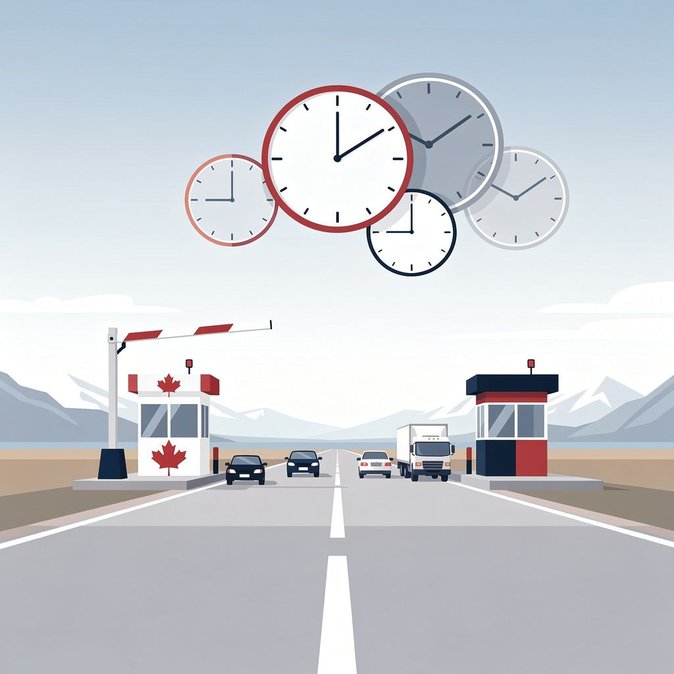
In a sweeping operational tweak, the Canada Border Services Agency announced on 9 October that 26 low-volume ports of entry in British Columbia, Alberta and Manitoba will shift their opening hours on 1 November 2026. The move synchronises Canadian border-post hours with adjacent U.S. Customs and Border Protection stations as the three western provinces adopt permanent daylight-saving time. Most affected crossings will open later in the morning and close earlier at night, though high-traffic Carway, AB will now remain open until midnight. Commercial traffic windows have also been adjusted, with separate hours published for trucks at ports such as Carson, BC and Cascade, BC. The CBSA says the changes reduce traveller confusion, cut overtime costs and prevent "after-hours" incidents where inadmissible travellers are turned back to a closed U.S. post. For supply-chain managers, the November–March alignment is critical: carriers missing the new cut-off could face costly layovers. Companies should update dispatch systems and driver route sheets well before Halloween and build in slack for the spring 2027 re-alignment, when U.S. clocks move forward again. Frequent leisure travellers and NEXUS members should also verify hours; some crossings popular with ski traffic—such as Nelway, BC—will now close two hours earlier. The CBSA has posted signage at all sites and updated its "Border Wait Times" mobile app, but advises against relying on third-party GPS data until databases refresh. While the announcement drew little political reaction, tourism boards worry that shorter evening hours could deter spontaneous cross-border dining and shopping trips. The CBSA counters that 24/7 crossings at major highways remain untouched, preserving essential trade corridors.
Source: IRCC.com