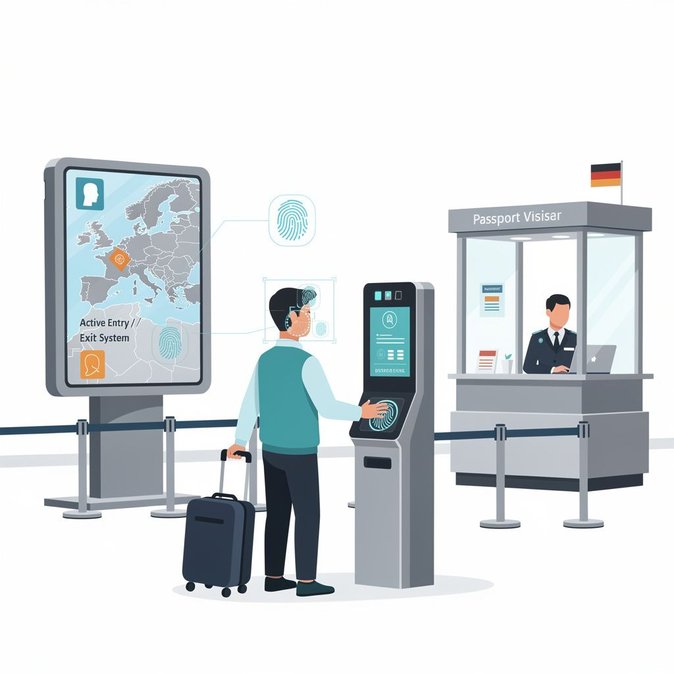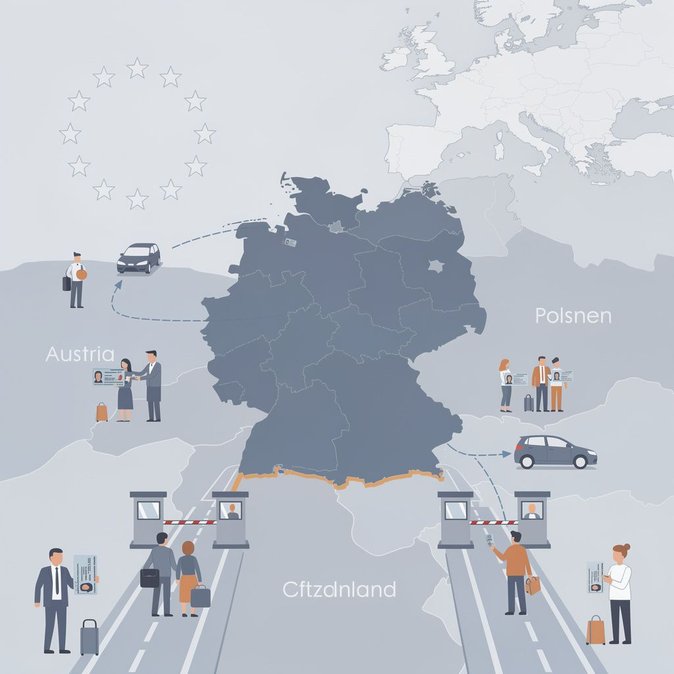
BRUSSELS/BERLIN — The European Commission’s Schengen dashboard, updated on 8 October 2026, confirms that Germany has prolonged its internal-border controls for another six months, now running from 16 September 2026 until 15 March 2027. The measure applies to land crossings with Austria, Switzerland, the Czech Republic and Poland, as well as spot checks on selected air and rail routes. Berlin cites “continued serious threats to public security and order posed by high levels of irregular migration and migrant smuggling” and strains on the asylum-reception system. Federal Police statistics show a 42 % year-on-year increase in unauthorised entries detected on these corridors during the summer of 2026, despite the full roll-out of the EU Entry/Exit System (EES) in April. For business travellers the extension means that passports or valid EU national ID cards must still be carried on intra-Schengen trips involving Germany, and modest delays remain possible at busy crossings such as the A3 (Passau) and the Brenner rail route. Companies running commuter shuttles or cross-border logistics should factor additional buffer time into schedules and remind non-EU staff that Schengen short-stay limits continue to apply even when systematic checks occur. The move keeps Germany aligned with Austria, Denmark and Sweden, which also maintain re-introduced border checks on migration-related security grounds. Mobility managers should monitor further Commission communications: under Schengen rules the current extension is the last ordinary six-month renewal available, so the government will need either to normalise the measure under Article 25a (exceptional circumstances) or step down controls in March.