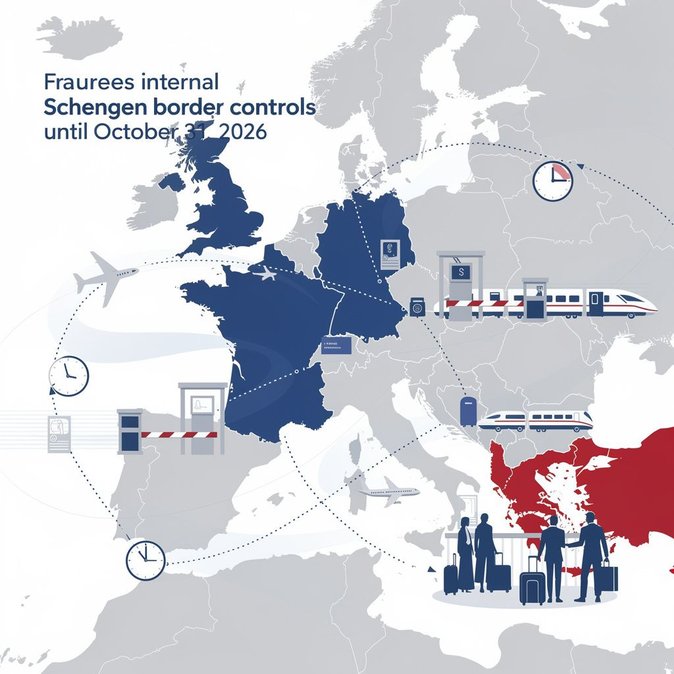
The French Interior Ministry quietly confirmed on 9 October that controls at the country’s internal Schengen borders will stay in force until 31 October 2026, citing an “ongoing and serious threat to public order and internal security”. France first re-introduced the checks after the 2015 terrorist attacks, and has since renewed them every six months under Article 25 of the Schengen Borders Code. According to the European Commission’s daily updated register, the current extension covers all road, rail, sea and air borders with Spain, Italy, Belgium, Germany, Luxembourg and Switzerland, as well as juxtaposed controls on cross-Channel services. Officials point to a resurgence of jihadist plots, a sharp increase in smuggling networks along the Channel coast and rising anti-Semitic hate crimes as justification. For globally mobile staff, the continued controls mean spot ID checks on trains such as the Eurostar, longer queues at land crossings and random searches at regional airports remain likely. Employers should advise travellers to carry passports or national ID cards even for intra-Schengen trips, factor in additional transit time, and review posted-worker notification lead times, which French police have been enforcing more strictly at the Belgian border. EU institutions are expected to press Paris for an exit strategy when the Schengen Council meets in November. Failure to normalise could trigger infringement proceedings or force a political renegotiation of the recently adopted Schengen reform package, potentially affecting how other member states manage their own temporary checks.