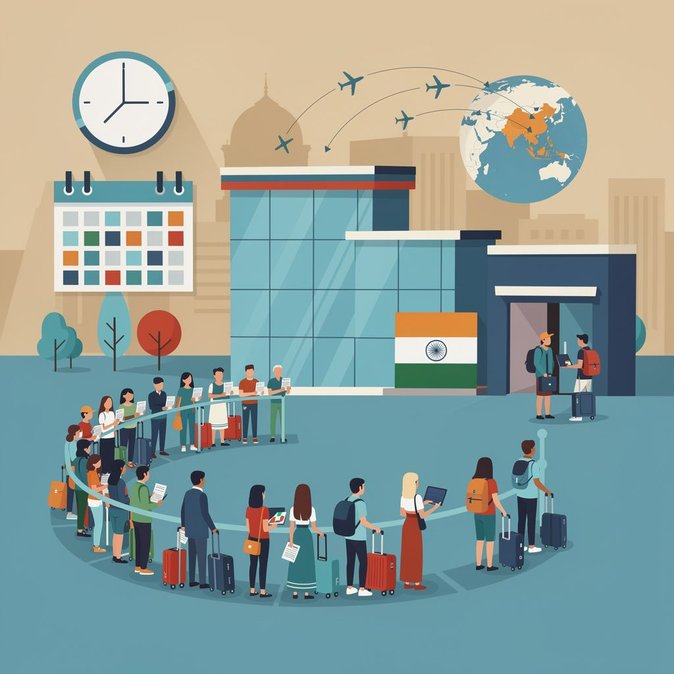
Fresh data pulled on 9–10 October by analytics portal WaitDelta reveals that U.S. visitor-visa (B1/B2) interview queues now average 8.6 months across India’s five consular posts, with Hyderabad hitting a record 11.5 months. Student-visa (F-1) wait times are shorter—45 days in Hyderabad and roughly 60 days in Delhi and Kolkata—but remain a critical bottleneck with spring-semester start dates only 12 weeks away. The figures come from the U.S. State Department’s Global Visa Wait Times table, which WaitDelta scrapes twice weekly. While Chennai and Delhi show marginal improvement since September, Mumbai’s B1/B2 line still exceeds 10 months despite a reported 20 percent increase in consular officer headcount this year. Petition-based categories (H-1B, L-1) are not currently published due to data-mapping verification. For corporates, the numbers translate into hiring delays, project slippage and higher travel-insurance costs as bookings must be rescheduled multiple times. Mobility managers are increasingly rotating short-term work to Canada or Mexico—where Indian nationals can apply as ‘third-country’ applicants—though those missions are also lengthening queues. The U.S. Mission in India continues to offer limited emergency slots for life-or-death medical travel, funerals and urgent business with documentary proof. Companies should screen requests tightly; abuse can lead to a one-year appointment ban. Looking ahead, stakeholders hope the new U.S. Fiscal Year visa allotments, effective 1 October, will allow posts to release more slots, but staffing and security-clearance constraints mean relief is unlikely before mid-2027.
Source: WaitDelta