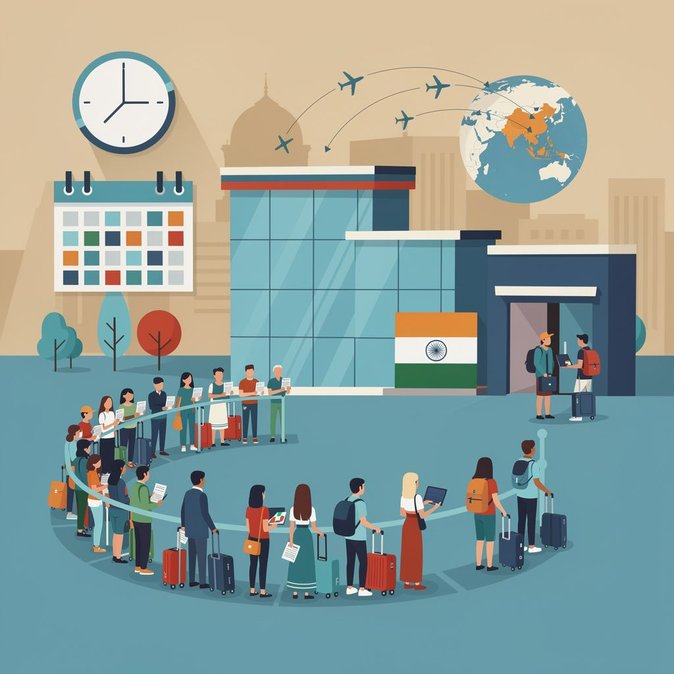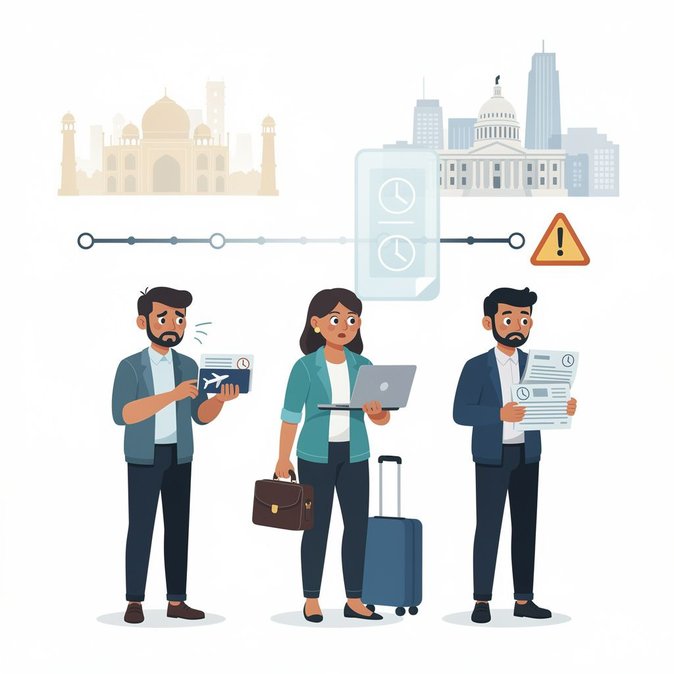
Returning from trade talks in Washington, Commerce and Industry Minister Piyush Goyal told the Economic Times Startup Awards in Bengaluru that tighter U.S. access to H-1B visas may ultimately accelerate India’s own innovation ecosystem. Speaking in the early hours of 10 October, the minister argued that every high-skilled visa withheld abroad nudges multinational firms to locate more R&D and global-capability-centre (GCC) roles inside India, creating jobs and deepening the local talent pool. Goyal’s remarks come amid a record 11-month wait in Mumbai and Hyderabad for B1/B2 interviews, and after the United States froze PERM filings for eight tech companies, most of them Indian. While some industry leaders privately worry about brain-drain bottlenecks, Goyal framed the restrictions as an opportunity: “Look at the entire ecosystem and you’ll realise that every H-1B not granted is a boost for Indian startups.” Analysts note that India has been trying to position itself as an alternative digital-skills hub. Government incentives—such as lower corporate-tax rates for new manufacturing and the forthcoming Innovation Bill 2027—aim to convert repatriated tech workers into founders and angel investors. For global mobility managers, the minister’s optimism does not erase immediate operational pain. Project timelines built around U.S. deployments must now incorporate year-long visa queues, and companies should budget for in-country delivery or “near-shore” models. HR teams are also seeing a spike in demand for Singapore, Canada and Germany assignments as stop-gaps, underlining the need for multi-jurisdictional mobility strategies. Yet, if India succeeds in anchoring more high-value work domestically, companies may find that building larger India hubs is not just a contingency plan but a competitive necessity by 2030.
Source: Times of India