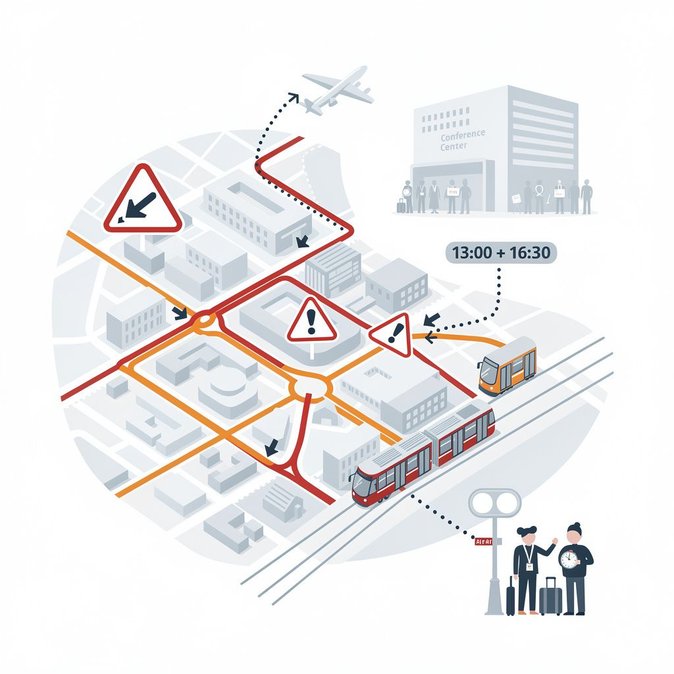
A protest march through Vienna’s city centre on Saturday, 10 October, forced Wiener Linien to impose rolling closures and diversions on seven key surface-transport routes just as the weekend tourist peak began. Lines D, 2, 71, 1A, 2A, 3A and 4A were rerouted or short-turned between 13:00 and 16:30, affecting direct links between Hauptbahnhof, the historic Ringstrasse district and the embassy quarter. Travellers were advised to switch to metro lines U2, U3 and U4, which continued to run normally. Real-time feeds showed delays of up to 25 minutes and overcrowding at transfer stations such as Schwedenplatz and Schottentor. Although the demonstration ended peacefully, Vienna’s smart-card ticketing system logged roughly 18,000 missed validations during the three-hour window – a proxy for passengers deterred from boarding surface services. Hoteliers around Karlsplatz reported early check-ins as conference guests returned on foot. For corporate mobility planners the episode is a reminder to build contingency time into airport-city transfers and to monitor Vienna’s open data feed for planned marches. The city has averaged two disruptive protests per week in 2026, often announced only 48 hours in advance. Companies with shuttle contracts may wish to secure temporary road permits to cross the Ring during such events. Wiener Linien restored normal service by 17:00, but warns further protests linked to EU agricultural policy are slated for 12 October.