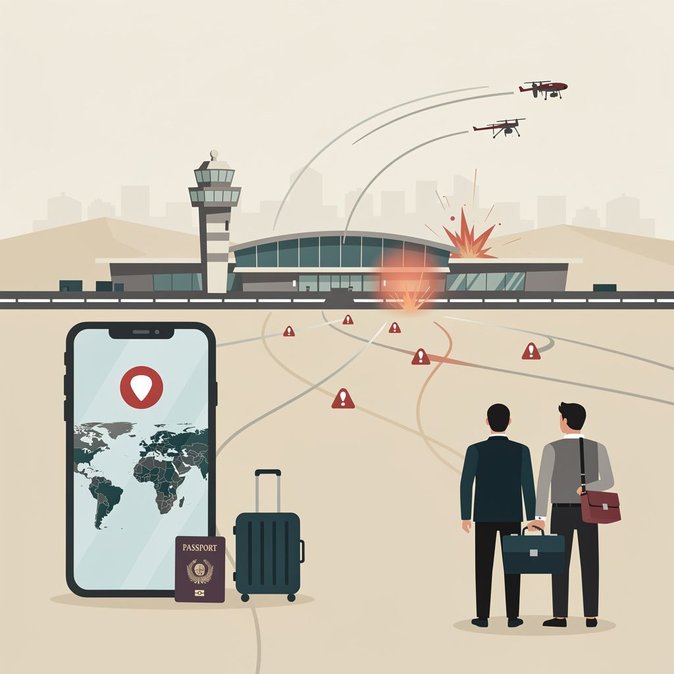
Spain’s Ministry of Foreign Affairs issued an unusually forceful statement at midday on 11 October after Yemeni Houthi rebels fired drones and missiles at Riyadh’s King Khalid International Airport, killing at least 12 people and injuring more than 300. Calling the assault “brutal and unacceptable”, Madrid conveyed condolences to Saudi authorities and urged an immediate ceasefire. Officials told Europa Press that the consular emergency unit has activated its rapid-response protocol: the embassy in Riyadh and the consulate in Jeddah are contacting the 724 Spanish citizens registered as resident in Saudi Arabia and checking flight manifests for short-stay visitors. No Spaniards are reported among the casualties, but the ministry raised its travel advisory to level 3 (“avoid non-essential travel”) for the Riyadh metropolitan area and recommended that travellers keep itineraries flexible and register on the ‘Registro de Viajeros’ platform. The incident highlights the exposure of civil aviation infrastructure to regional proxy conflicts just as Gulf carriers ramp up winter schedules into Spain. Iberia, which codeshares with Saudia on the Madrid–Riyadh route, said Sunday’s return flight IB5788 operated normally but that schedules will be reviewed daily. Global mobility teams with staff transiting Saudi hubs to Asia should consider rerouting through Dubai or Doha until security stabilises. Insurance brokers note that most corporate travel policies exclude coverage for acts of war; risk managers should verify that emergency-extraction riders are in place. Employers with expatriate assignments in Saudi industrial zones are advised to re-test shelter-in-place plans and ensure up-to-date contact chains. The foreign ministry said further updates will be issued “as events evolve”.
Source: Europa Press