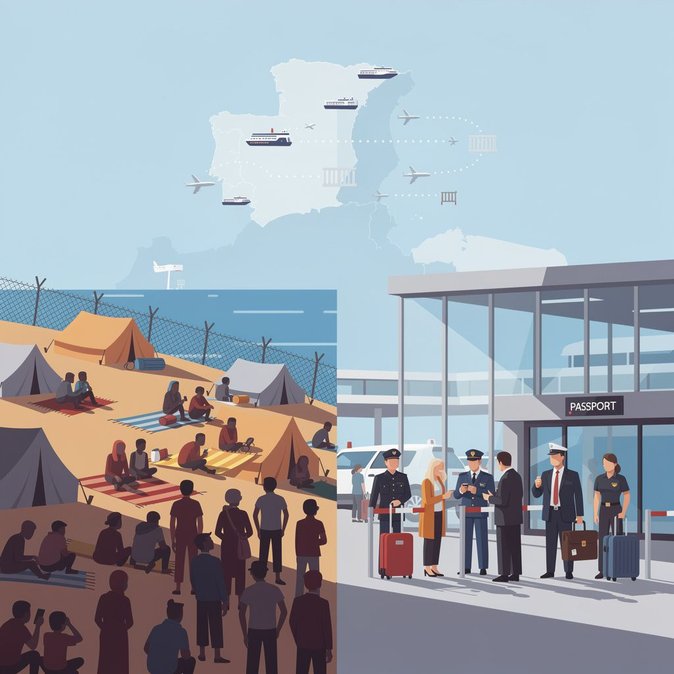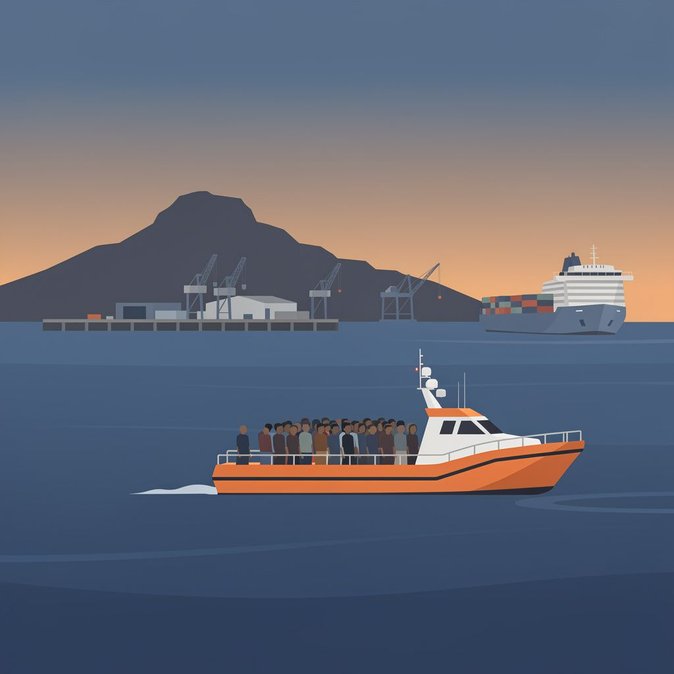
Spain’s maritime-rescue agency confirmed that at 03:40 on 10 October the patrol boat Guardamar Calliope intercepted a wooden craft carrying 53 sub-Saharan migrants approximately 18 nautical miles north-east of Lanzarote. The occupants—35 men, 12 women and six children—were transferred to Arrecife’s Los Mármoles quay, where Red Cross and Canarian health-service staff performed medical checks; none required hospitalisation. The Canaries Migration Monitoring Centre notes that 2026 arrivals to the archipelago now exceed 55,000—already 18 % above the entire 2025 total—driven by calmer seas and deteriorating security in the Sahel. The uptick has led to recurring capacity crunches at the two main temporary reception centres on Gran Canaria and Fuerteventura, prompting authorities to divert new arrivals to the smaller islands of Lanzarote and La Palma. For companies operating rotational staff on offshore-energy and tourism projects, the incident is a reminder that emergency-response protocols can temporarily restrict port access. On Saturday morning the Harbour Master limited commercial traffic at Los Mármoles for three hours to prioritise humanitarian operations, delaying a cruise-ship bunkering call and two container movements. Spanish and EU officials continue to press West-African governments to accelerate readmission agreements and are expanding Frontex aerial patrols around the Canary approaches. Mobility advisers recommend monitoring port-authority NOTAMs and factoring potential diversions into crew-change logistics, especially during the autumn high-risk window. Although individual rescues rarely affect inbound tourism, accumulated delays to ferry links and stretched local-medical capacity can disrupt group incentive travel and MICE events scheduled in the archipelago. Corporate planners should keep contingency accommodation blocks outside key rescue ports and ensure travellers have robust medical-evacuation cover.
Source: Europa Press