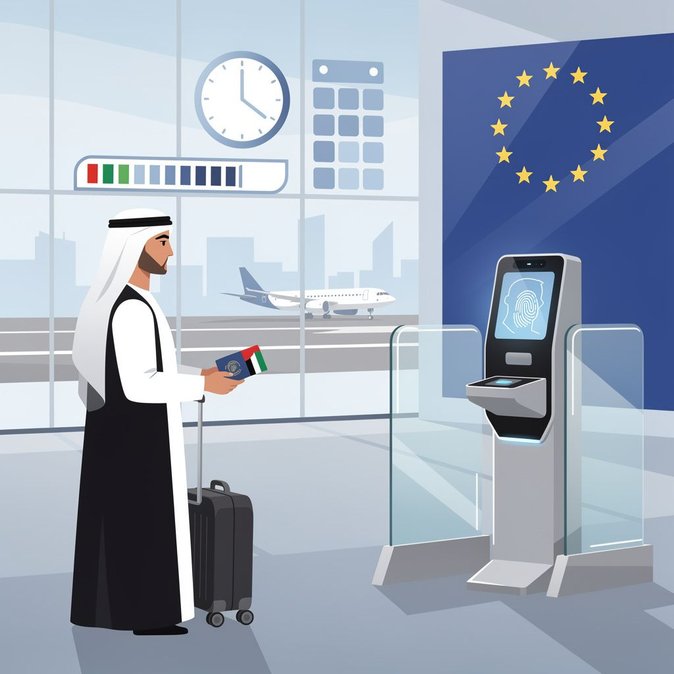
The UAE Ministry of Foreign Affairs (MoFA) updated its online travel bulletin on 12 October, reminding Emirati citizens that all European Union member states are activating the long-awaited Entry/Exit System (EES) this week. The new scheme replaces passport stamps with biometric scans and automatically tracks the 90-day Schengen stay limit. Under the EES, UAE nationals using visa-free access to the Schengen area will have fingerprints and facial images captured at their first point of entry; subsequent crossings within a 180-day window will reference the database in seconds. The process is designed to reduce wait times, but early pilots in Portugal and Spain have reported bottlenecks as travellers familiarise themselves with self-service kiosks. MoFA advises citizens to arrive at EU airports earlier than usual, ensure passports have at least six months’ validity and keep proof of accommodation or onward travel handy. The ministry also reiterates that some EU states still require travel-health insurance despite visa-free entry. For corporate mobility managers, the EES means overstays will be flagged automatically, limiting the scope for “back-to-back” business trips that previously skirted manual stamp checks. Employers should track days-in-Schengen for frequent flyers to avoid fines or future entry bans. Although the EES is an EU programme, the UAE’s proactive advisory underscores its commitment to protecting the travel privileges of its passport holders—currently ranked 13th globally for visa-free access.