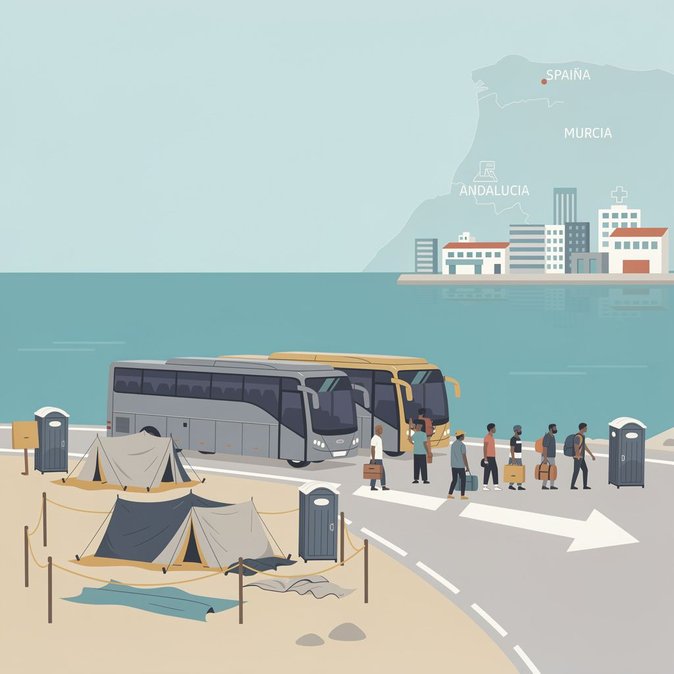
Local authorities in Ceuta dismantled the improvised ‘El Guano’ camp over the weekend, relocating roughly 1,200 migrants to temporary shelters and reception centres across mainland Spain. Officials said the operation, completed on 11 October, was necessary to restore sanitary conditions before the upcoming visit of King Felipe VI. Public-health teams had warned of rising cases of scabies and gastroenteritis inside the camp, which sprouted spontaneously after July’s mass border crossing. The Ministry of Inclusion coordinated transfers via chartered buses and ferries to facilities in Cádiz, Almería and Murcia, where asylum screenings will continue. NGO workers praised the move but criticised the short notice, noting that many migrants missed legal appointments because they were not informed in advance. For companies employing humanitarian staff or contractors in Ceuta, the clearance eases pressure on hotel capacity and urban transport. However, mainland cities receiving transferees may face sudden spikes in demand for interpretation services and legal aid, creating short-term staffing opportunities for relocation providers. Logistics operators should note that authorities temporarily closed the N-352 coastal road during the transfer, causing delays for freight entering the port. Similar closures are likely during the royal visit later this month. The relocation aligns with Spain’s broader strategy to distribute reception duties nationwide—a model that could become permanent under the EU’s new Pact on Migration and Asylum, slated for full implementation in June 2027.
Source: Spain in English