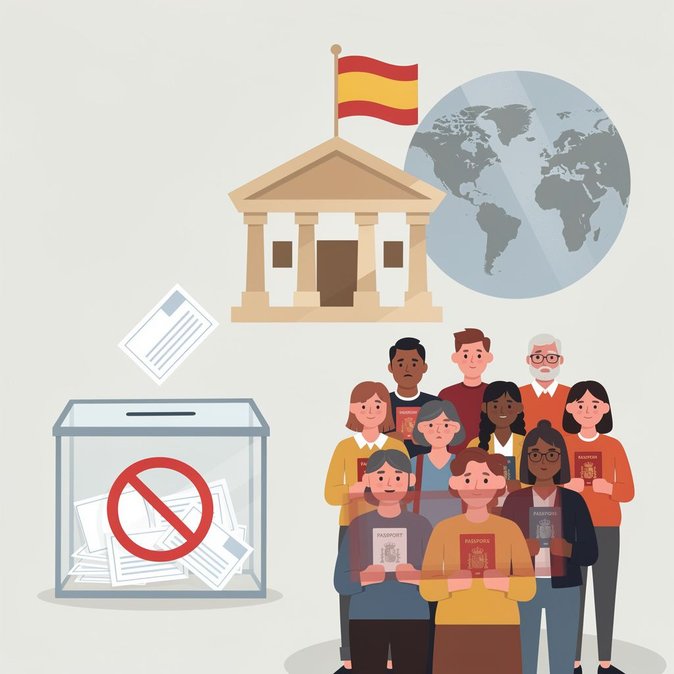
Spain’s highest administrative chamber delivered a shock ruling on the Fiesta Nacional holiday, confirming that 163,020 citizens who naturalised under the so-called Law of Grandchildren will not be allowed to vote in the 29 November general election. The court dismissed the Government’s appeal, arguing that doubts over the accuracy of the overseas electoral census (CERA) outweigh individual suffrage rights. The decision prolongs legal limbo for descendants of Spanish exiles who obtained nationality through the 2022 Memory Law. Many reside in Latin America and had already bought flights or organised consular appointments to cast ballots. Corporate mobility managers say the uncertainty complicates assignment planning: employees who recently gained Spanish passports may now need visas to accompany voting trips or postpone postings that depended on EU free movement. The justices gave the affected group five working days to present individual allegations and ordered urgent publication in the BOE and at consulates. Given the tight timeline—little more than six weeks before polling day—observers doubt any remedy is feasible. The Interior Ministry had warned that re-scrubbing the CERA before 1 January 2027 was “materially impossible”, but the court retorted that the administration failed to even begin the task. Beyond electoral rights, the ruling signals a stricter stance toward mass naturalisation programmes. Immigration lawyers fear knock-on effects for pending applications under the Digital-Nomad and Talent visas, as political scrutiny of identity verification grows. Multinationals should verify the nationality status of staff family members and monitor BOE notices in case additional documentation is required. The Government may file a constitutional challenge, yet experts say a favourable verdict would likely arrive after the election. For now, companies with dual-national employees should plan for continued reliance on non-EU mobility procedures through year-end.
Source: El País