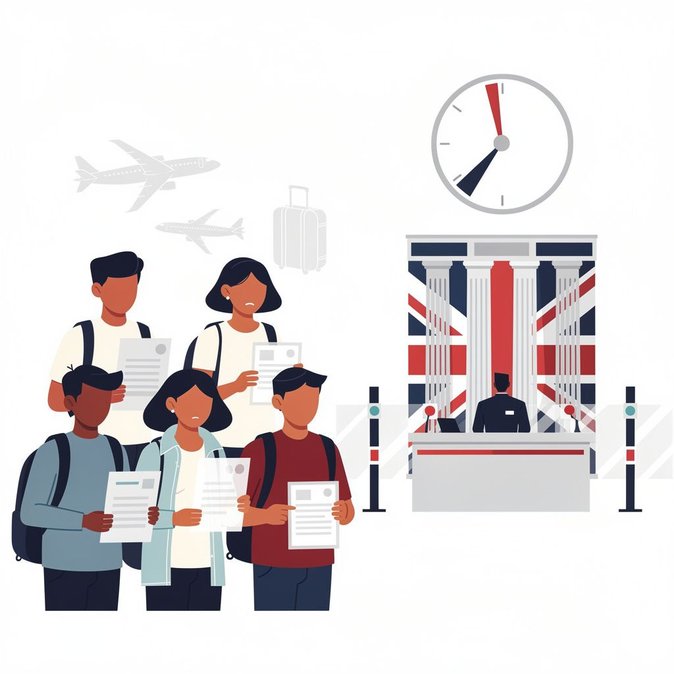
Indian aspirants to British campuses face a new, unexpected hurdle this admissions season. According to a Times of India report on 12 October, a growing number of UK universities have begun withdrawing unconditional offers issued to students from India, Pakistan, Nigeria and Bangladesh. The trigger is the Home Office’s June 2026 rule change that slashes the acceptable student-visa refusal rate for ‘sponsor’ universities from 10 % to 5 %. Institutions that breach the threshold risk losing their sponsor licence—effectively a death sentence for their lucrative international recruitment pipelines. Faced with that existential threat, admissions departments are conducting retroactive risk audits using metrics such as bank-balance verifiability, English-language scores and historic visa-refusal data. Applicants flagged as ‘high-risk’ are having their Certificates of Acceptance for Studies (CAS) annulled before they can even submit a visa application, driving the withdrawal rate for Indian students from 1.2 % in H1-2025 to 5.2 % in H1-2026. Consultants say the hardest hit are Tier-2 cities, where family income documentation is more difficult to authenticate. For Indian IT and consulting firms that routinely sponsor employees for UK master’s programmes as part of leadership-development tracks, the change complicates workforce-planning cycles. HR teams must now build contingency pathways—such as EU or Singapore programmes—and budget for higher deposits at UK universities that demand ‘commitment fees’ before issuing a new CAS. Students already in the UK are also uneasy: universities that overshoot the 5 % ceiling could face additional Home Office audits that may tighten post-study work (Graduate Route) monitoring. British recruiters warn that the policy, intended to curb immigration abuse, could backfire by pushing genuine STEM talent toward Canada, Germany and the Netherlands, all of which have eased post-study work rules in 2026. The UK India Business Council has called for a more nuanced ‘risk-banding’ system that would penalise chronic offenders but spare universities with strong compliance records. Meanwhile, education agents advise prospective applicants to secure pre-visa financial verification letters and to strategise plan-B destinations well before UCAS deadlines. Until clarity emerges, corporations should reassess sponsorship ROI, while students must prepare for heightened documentation checks and possible late-cycle offer cancellations. The episode is a stark reminder that immigration risk now sits squarely in university boardrooms—and directly influences India-UK mobility flows.
Source: The Times of India