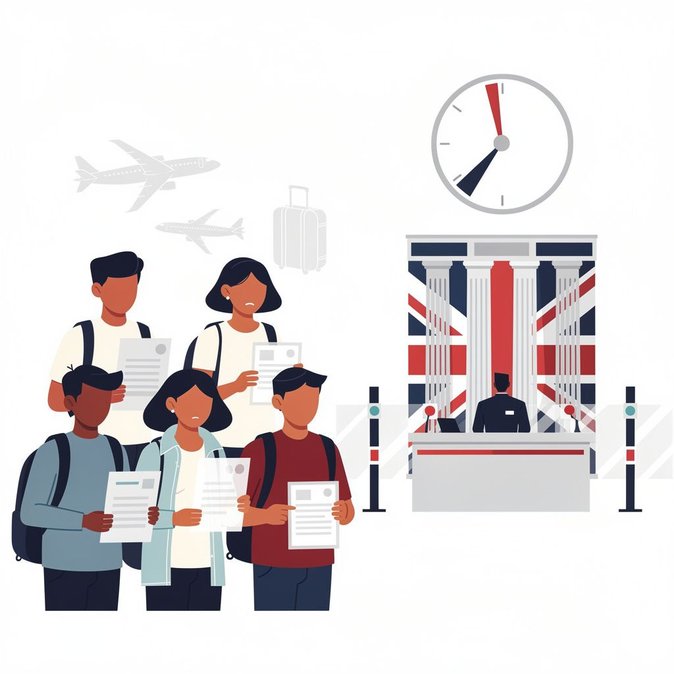
Several British universities have begun withdrawing issued offers to prospective international students—especially from India, Pakistan and Nigeria—after London tightened the permissible study-visa refusal rate from 10 % to 5 % with effect from June 2026. A Financial Times analysis quoted by The Times of India shows withdrawn Indian applications rising to 5.2 % in H1 2026, up from just 1.2 % a year earlier; some institutions have reportedly frozen recruitment from Pakistan altogether. Under the UK’s sponsorship regime, failure to keep refusals below the cap can trigger audits or the loss of a university’s sponsor licence—a risk administrators are unwilling to take amid continued political pressure to curb net migration. To avoid breaching the threshold, admissions teams are pre-screening “higher-risk” markets and retracting conditional offers even before students apply for visas. For Indian families who have already paid deposits, a revoked offer means scrambling for alternatives or deferring plans by a full academic year, with sunk costs on English-tests, counselling fees and accommodation bookings. Education consultants advise applicants to maintain a diversified shortlist, secure unconditional offers where possible and budget for elevated proof-of-funds scrutiny. The episode underscores how immigration policy can shift overnight and why corporate sponsors and scholarship bodies must build contractual clauses that protect against visa-related course withdrawal. With more than 140,000 Indian students enrolled in the UK last year, any sustained fall-off would ripple through sectors from housing to part-time labour in university towns.
Source: The Times of India