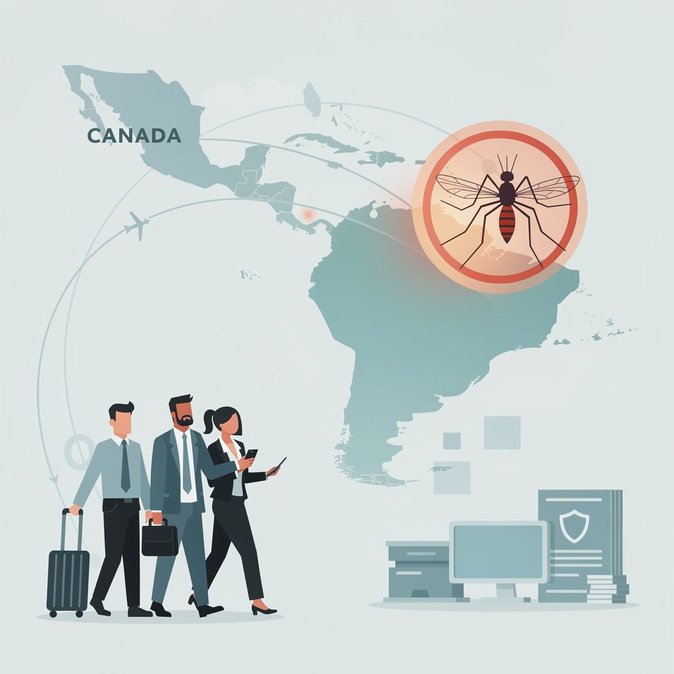
The Public Health Agency of Canada (PHAC) updated its travel-health notices on 13 October 2026, elevating the risk of Chikungunya virus to Level 2 (‘practise enhanced precautions’) for Costa Rica, Cuba, French Guiana, Nicaragua and Suriname after a 30 per cent surge in locally transmitted cases since mid-September. Chikungunya, a mosquito-borne disease that can cause debilitating joint pain, has no specific treatment or vaccine. PHAC advises Canadians travelling for business or leisure to use EPA-approved repellents, wear long-sleeved clothing and stay in accommodations with screened windows or air conditioning. The update is particularly relevant to mining, agrifood and tourism companies sending staff to affected regions during the winter high-season. Employers should review pre-departure medical briefings and consider flexible sick-leave policies, as post-infection joint pain can last weeks, impairing productivity. Insurance providers may reclassify the destinations as elevated-risk areas, potentially affecting premium calculations for group travel plans. Global-mobility leaders are advised to verify that evacuation coverage includes vector-borne illnesses and to keep abreast of any entry-screening changes local authorities might impose if case counts climb further. While the notice stops short of recommending that travellers postpone trips, it signals heightened surveillance and could precede airport-level screening if regional outbreaks worsen.
Source: Government of Canada – PHAC