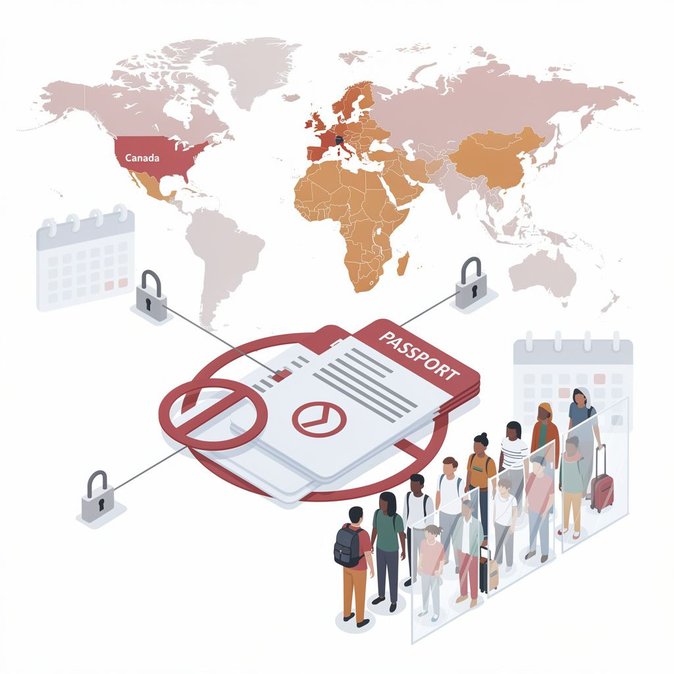
New Canada Gazette statistics released this week reveal the human scale of Ottawa’s public-health response to the Ebola outbreak in Central Africa. As of 15 September 2026, Canada had suspended 24,945 previously issued immigration documents—mainly visitor visas and study permits—for residents of the Democratic Republic of the Congo (DRC), Uganda and South Sudan. In addition, 33,795 permanent and temporary residence applications remain in limbo because IRCC cannot finalize decisions while the “Minimizing the Risk of Exposure to Ebola Disease in Canada” order is in force. Almost 19,000 of those are protected-persons PR cases, highlighting the unintended impact on refugee resettlement. Uganda accounts for 95 per cent of the affected protected-persons inventory, reflecting its role as a regional hub for displaced people. The emergency measures—first introduced on 27 May 2026 and extended to 27 November 2026—bar affected foreign nationals outside Canada from travelling, even if they already hold valid visas or electronic travel authorisations. Canadian citizens, permanent residents, U.S. citizens and certain accredited officials are exempt, and the immigration minister may grant case-by-case exemptions on humanitarian grounds. For global-mobility teams, the figures serve as a cautionary tale: corporate travellers or assignees residing in the three listed countries will be unable to enter Canada until the order lapses or individual exemptions are secured. Employers should therefore reroute essential trips through third-country hubs or consider remote-work alternatives. Applicants caught in the processing freeze can expect IRCC to expedite files once restrictions lift, but no specific timeline has been promised. Public-health officials insist the extension is warranted because the DRC continues to report new Ebola cases—7,258 confirmed infections and 3,510 deaths as of 13 September 2026. Ottawa could renew the order again if cross-border transmission risks persist, making ongoing monitoring crucial for risk managers and immigration counsel.
Source: Immigration.ca