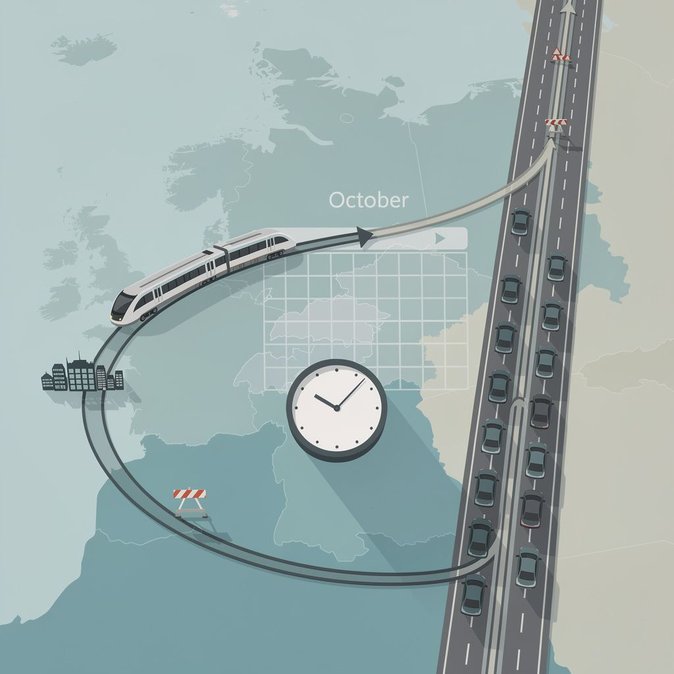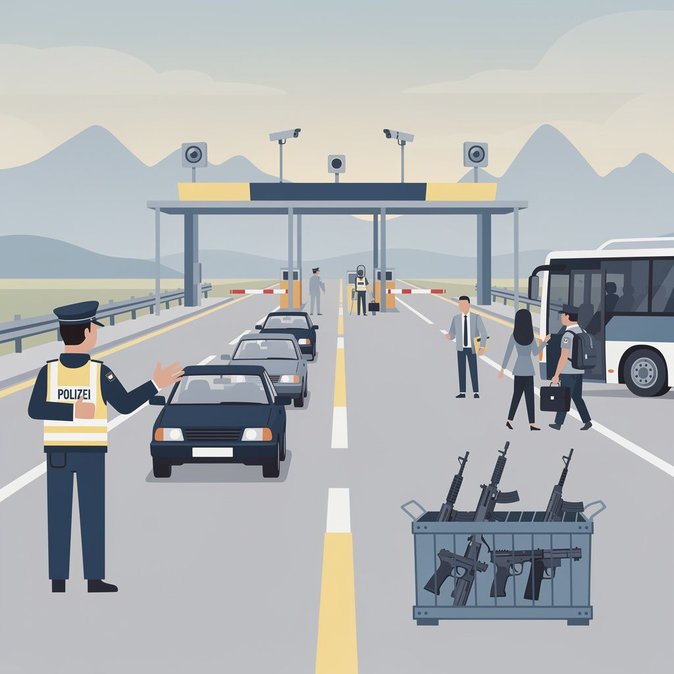
The Federal Police Directorate in Munich released an operational update on 14 October detailing several interceptions along the A8 motorway near the Austrian frontier. In the most notable case officers stopped a Georgian national whose van concealed four irregular migrants and a readily accessible blank-firing pistol modified to fire live rounds. The driver was taken into investigative custody on suspicion of organised smuggling, while the passengers were transferred to the initial-reception centre in Rosenheim. The update, distributed via the local press portal, underscores how Germany’s temporary re-introduction of controls at all land borders until at least March 2027 is being enforced on the ground. Since the controls were extended on 16 September, Munich’s directorate claims to have apprehended 132 people with outstanding warrants and refused entry to 94 individuals lacking the right to travel—an 18 % increase over the previous month. For mobility managers the data signal continued uncertainty for cross-border commuters and shuttle-bus services connecting Austrian factories with Bavarian offices. Logistics firms, meanwhile, report average transit times on the Kufstein–Munich corridor have lengthened by 20 minutes, raising costs during the pre-Christmas peak. Police officials credit new "super-recogniser" software that flags repeat offenders in real time against the Schengen Information System. The technology will roll out to additional checkpoints at the Polish and Czech borders before year-end, potentially broadening the impact on intra-EU business travel. Companies moving staff by road should advise passengers to carry passports rather than relying on national ID cards, keep work-assignment letters handy, and build extra buffer time into itineraries until the status of the border controls is reviewed in March.