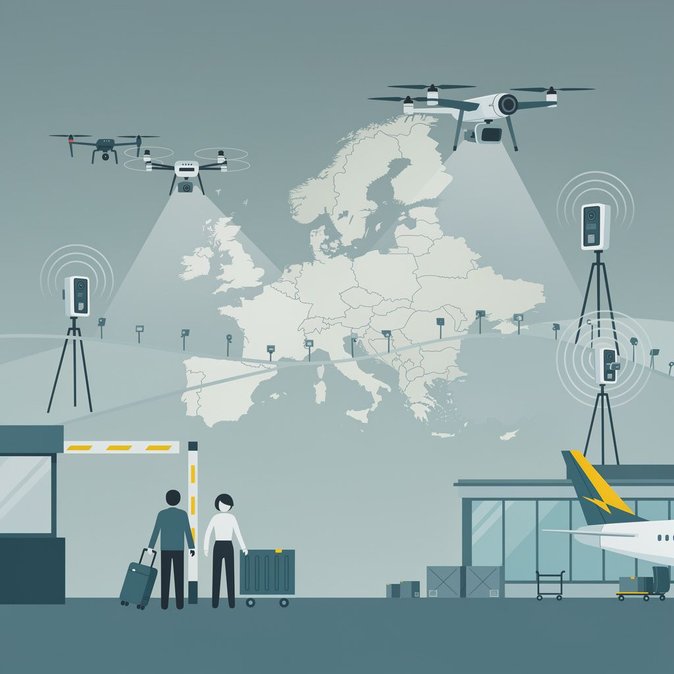
The European Commission on 13 October approved an additional €130 million under the Border Management and Visa Instrument (BMVI) to fund drone and counter-drone projects in 16 Member States, including Germany, and in Norway. The money tops up a €250 million package agreed in 2025 and will be available through 2029. German federal police will receive an estimated €18 million share to expand fixed-wing surveillance drones along the Polish and Czech borders and to integrate counter-UAS sensors at Frankfurt and Munich airports. Interior Minister Alexander Dobrindt said the technology will “significantly reduce blind spots” created by recent staff shortages and will help detect smugglers using low-altitude drones to drop contraband over the frontier. Business-aviation groups cautiously welcomed the funding but sought assurances that counter-drone jamming would not interfere with GPS-based approach procedures at regional airports. The Commission insists that projects must comply with the European Union Aviation Safety Agency (EASA) performance standards published in July. From a mobility perspective, the investment signals tighter scrutiny at border crossing points just as Germany maintains internal Schengen checks until at least March 2027. Logistics firms moving goods by air and sea should expect more random inspections if airborne surveillance flags anomalies. Companies employing cross-border staff may in future have to register drone operations used for site surveys or media shoots, as ministries draft rules to avoid false positives in border-security monitoring zones.