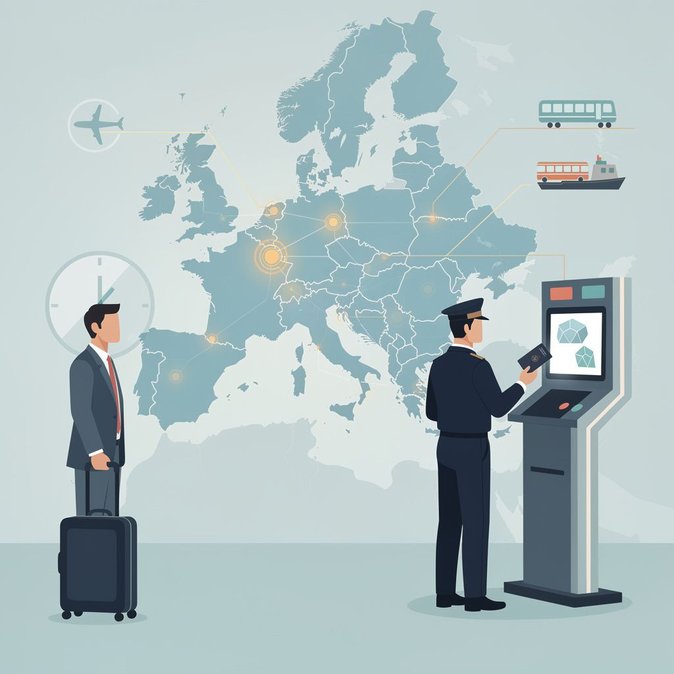
The European Commission confirmed today that a major upgrade of the Schengen Information System (SIS) went live on 15 October. A brand-new “information alert” category now allows trusted data supplied by non-EU partners and international organisations to be uploaded directly into the SIS, giving French police, gendarmes and border-guard units instant visibility on suspected terrorists and serious organised-crime figures before they set foot on French territory. For France—whose territory ranges from busy external airports such as Paris-Charles-de-Gaulle to the land borders with Spain, Italy, Belgium, Germany, Switzerland and Luxembourg—the change is more than technical. Officers can now see intelligence from Europol and third-country services displayed in real time on handheld tablets and border kiosks. That closes a gap that was highlighted after the 2025 Arras railway knife attack, when fragmented information flows delayed the identification of the perpetrator. The new alert sits alongside existing SIS functions such as European Arrest Warrants and “refusal of entry or stay” flags, but—crucially—can be triggered even if a suspect is not subject to judicial proceedings. French investigators working on overseas terrorism files will therefore be able to insert profiles based on intelligence assessments, a flexibility long requested by the Ministry of the Interior. All 31 Schengen and associated states have access, but France and Germany are expected to account for almost half of the first 10 000 alerts entered, according to Commission projections. For corporate mobility managers the implications are two-fold. First, French border checks on arriving assignees may take slightly longer as officers consult the enriched database. Second, any employee who has been flagged—accurately or by mistake—could be denied entry at any Schengen frontier, not just in France. Companies are advised to remind staff with sensitive travel histories (dual nationals, humanitarian-aid workers in conflict zones, etc.) to verify their records well in advance and carry supporting documents. In the medium term, the Commission plans to link the upgraded SIS with ETIAS and EES, creating an integrated pre-travel vetting ecosystem. Once that happens, airlines flying to France will have to deny boarding to passengers who match an information alert—shifting the “moment of truth” from the airport immigration desk to the airline check-in counter.
Source: European Commission – DG HOME