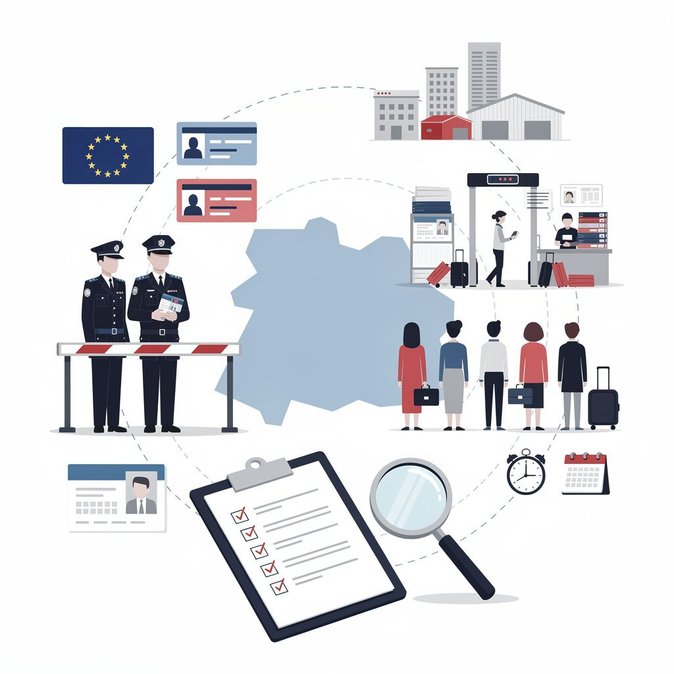
Poland’s Border Guard (Straż Graniczna) and National Police mounted an unprecedented two-day enforcement operation on 12–13 October aimed at verifying the legal status of third-country nationals living and working in Poland. Nearly 600 officers fanned out across the country, checking construction sites, logistics depots, shared accommodation and inter-city transport hubs. In just 48 hours they carried out more than 1,400 on-the-spot checks and identified 82 foreigners staying in Poland irregularly. The largest nationality groups inspected were Ukrainians (about 530), Colombians (about 290) and Bangladeshis (nearly 80). More than 60 administrative return procedures have already been opened; in over 50 cases the ground was illegal stay, while roughly ten individuals were deemed a security threat. Those concerned now face removal and entry bans of up to five years. Officials stressed that the blitz was intelligence-led and targeted high-risk locations highlighted by labour inspectors and local authorities. Employers found to have hired undocumented workers will be referred to labour prosecutors and may face fines of up to PLN 30,000 (€6,600) per person. For global mobility managers the message is clear: Poland is tightening post-pandemic oversight and expects companies to keep meticulous records of residence titles, work permits and posted-worker notifications. Businesses using subcontractors—particularly in construction and e-commerce warehousing—should audit their supply chains urgently to avoid reputational damage and project delays. The operation also foreshadows the country’s preparations for the EU Entry/Exit System (EES) launching in 2027: once EES is live, overstayers will be automatically flagged at departure, making ad-hoc inland controls less necessary but potentially more punitive.