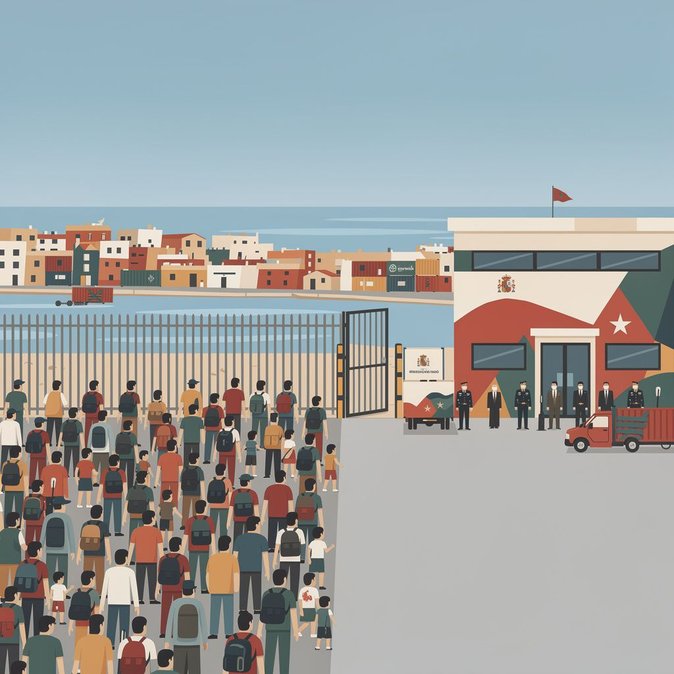
Speaking to reporters in Rabat on 20 October, Ceuta President Juan Jesús Vivas said that “no fewer than 15,000” migrants remain in the enclave nearly three months after the late-July crossings, far exceeding Spain’s official estimate of around 7,500 still in temporary shelters. He based his calculation on spikes in local water consumption, hospital visits and emergency-service calls. Vivas warned that policing, health care and infrastructure are reaching “breaking point”, citing a 184 % jump in emergency calls and a 400 % surge in hospital emergency admissions in the past month. He reiterated demands for the Spanish government to provide more personnel to accelerate expulsions and to work with Rabat and the EU on the repatriation of approximately 3,300 unaccompanied minors. The comments come as Madrid highlights progress—12,700 returns to date—and credits Morocco for facilitating voluntary departures. Nevertheless, the Ceuta leader’s higher figure has reignited debate about data transparency and the capacity of Spain’s reception system. For businesses operating in Ceuta—including logistics firms that shuttle goods across the Strait of Gibraltar—the prospect of prolonged migrant accommodation raises concerns over labour availability, security costs and potential disruption at the port. Cross-border workers who commute daily from northern Morocco may also face longer wait times if Spanish authorities intensify document checks in response to the political pressure. EU observers note that the spat underscores diverging narratives within Spain and could influence upcoming Council discussions on Schengen border-control derogations. Corporations should plan for possible extensions of Spain’s temporary re-introduction of controls on travel between Italy and Spain, currently set to expire 22 October but easily renewable.
Source: Morocco World News