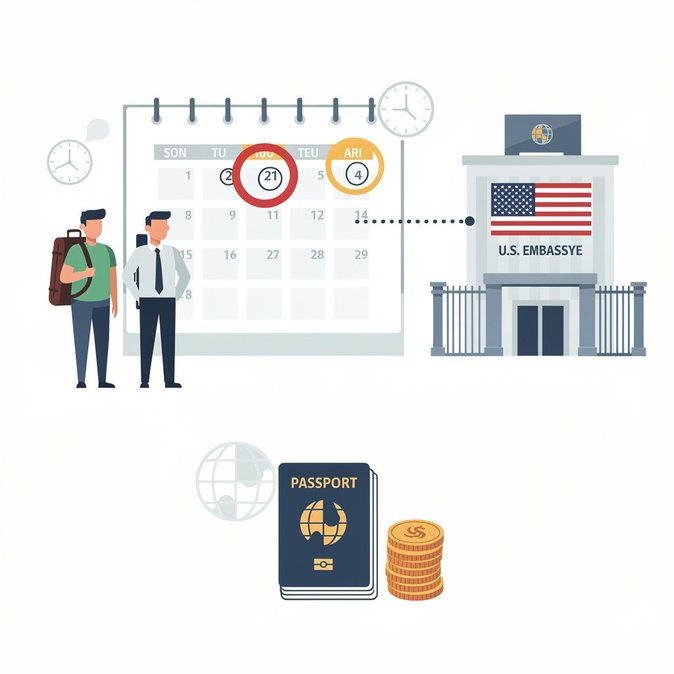
The United States has quietly tightened a procedural rule that will affect every Brazilian applying for a non-immigrant visa. According to an update confirmed by the U.S. Mission and first reported by Folha de S.Paulo on 20 October 2026, applicants may now reschedule or cancel each of their two required appointments—the visit to the CASV biometrics centre and the interview at the consulate—only three times. After a third modification, the record is automatically locked and the visa-seeker has to file a brand-new DS-160, pay the US$ 185 MRV fee again, and restart the queue. The change applies to all categories, from B-1/B-2 business-tourist visas to the much-used F, J and L classes. Consular officials told travel-trade representatives that the measure is designed to curb “placeholder shopping,” a practice in which agencies and individuals book and repeatedly shift coveted slots in Rio de Janeiro, São Paulo, Brasília, Recife and Porto Alegre, inflating wait times for legitimate travellers. Before the change, some applicants reported moving appointments more than a dozen times while hunting for earlier dates. The cap brings Brazil in line with limits already adopted in Mexico and India. For corporates that move staff frequently between Brazil and the United States, the immediate implication is the need for firmer trip planning. Mobility managers should instruct travellers to finalise documentation (new passports, prior US visas, supporting letters) before booking and to avoid speculative slot-grabbing. Employers may also want to earmark extra budget for re-filing in case unavoidable changes—such as sudden project delays—occur. The new rule does not change interview-waiver eligibility, reciprocity fees or visa validity. However, with first-time B-class interview waits in São Paulo still hovering near 250 days, any forced restart could postpone travel by months. Experts recommend using off-peak posts—Recife is currently under 100 days—and monitoring the “expedited appointment” function for urgent business trips. Travel agents have asked the mission to consider a grace period, but consular sources indicated the policy is already live. Applicants who have already exceeded three changes will see a warning banner in their CGI Federal profile instructing them to begin a new application. In the medium term, the cap may actually shorten overall queues if it dissuades speculative bookings. Until then, companies should embed the new limit in their global-mobility checklists and communicate clearly with affected employees.
Source: Folha de S.Paulo