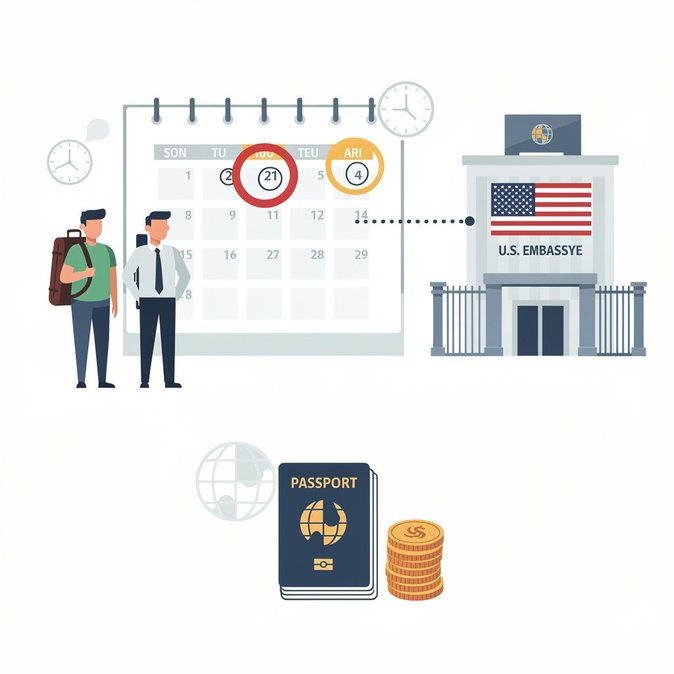
Brazilians planning trips to the United States woke up on 21 October 2026 to a new hurdle at the consular window. According to a notice confirmed by the U.S. Consulate-General in São Paulo, the online scheduling portal now allows every applicant to cancel or reschedule a consular appointment no more than three times per visa process. The rule—quietly activated on 29 September but disclosed publicly this week—applies to all non-immigrant categories, including the high-demand B-1/B-2 (business/tourism), student (F/J) and work (L, H, O) classes. For years, Brazilian applicants have relied on a strategy nicknamed “calendar surfing”: booking the first available slot (often months away) and then obsessively checking the system for earlier dates, sometimes changing appointments dozens of times. Consular officials say that practice clogged the platform, generated thousands of unused time-slots and contributed to wait times that still exceed 200 days in São Paulo and Rio de Janeiro. By capping alterations, Washington hopes to stabilise queues and deter bulk resellers who profit from automated bots that capture vacancies and sell them in online forums. In practical terms, travellers must now choose dates more carefully. After the third change—be it a cancellation or a reschedule—the system locks the request. The applicant must start a brand-new DS-160, pay another US$ 185 fee and re-enter the line for both the CASV biometrics centre and the embassy/consulate interview. Corporate mobility managers warn that the extra cost and potential delay could disrupt project start-ups, seasonal assignments and last-minute executive travel, particularly in sectors that depend on quick trips to U.S. clients or headquarters. Companies are already advising staff to align visa booking with confirmed travel dates and to build “visa buffers” into project timelines. Large multinationals with volume agreements are reviewing internal policies to avoid unnecessary rescheduling and to track how many changes each traveller has left. Immigration advisers also recommend monitoring passports’ remaining validity, as any document renewal would likewise trigger a brand-new process under the new rule. While the measure does not directly reduce the backlog, consular sources expect the queue to become more predictable within two to three months—good news for Brazil-based firms planning 2027 budgets. In the meantime, mobility teams should communicate the change broadly, audit their open visa cases and remind travellers that simply viewing the calendar does not count against the three-change limit; only confirmed alterations do.
Source: UOL Notícias