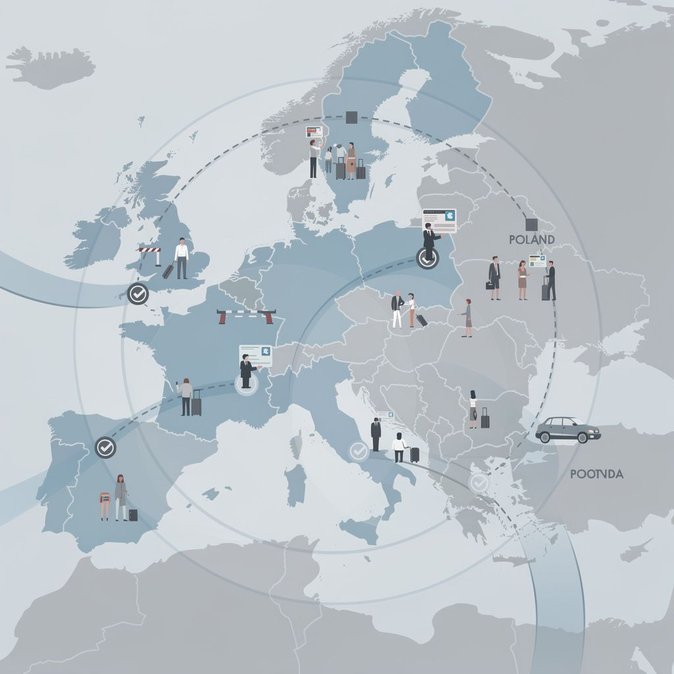
The European Commission’s live register of temporary internal-border controls, updated on 21 October 2026, confirms that eight Schengen members—-including Germany, Denmark, Austria and Poland—-will keep checks in place well into 2027. Germany’s own controls, originally reintroduced in September, run until 15 March 2027 and cover land borders with nine neighbours from France to Poland. Crucially for German outbound travellers, two adjacent states are following suit. Denmark will police its land and sea frontiers with Germany from 12 November 2026 to 11 May 2027 to counter potential sabotage threats, while Poland continues its checks on the German line until 30 March 2027 because of “persistent migratory pressure.” The overlapping measures mean that business travellers driving from Hamburg to Copenhagen or from Berlin to Wrocław could face up to three consecutive inspections—-German exit, Danish or Polish entry, and ad-hoc spot checks en route. Airlines and rail operators must also prepare: Danish police have warned they may board international trains at Flensburg, and LOT has reminded passengers on Warsaw–Frankfurt flights to have passports ready for random gate checks. For global-mobility managers, the take-away is to treat intra-Schengen trips more like third-country movements: carry passports, allow buffer time and monitor country-specific exemption lists (e.g. cross-border commuters with resident status). EU law allows such controls for a maximum of three years, suggesting the patchwork will remain part of the travel landscape for at least the next 18 months. Corporate relocation specialists advise newcomers to Germany to factor in delayed family visits from neighbouring countries, as non-EU spouses may now be asked for proof of legal residence when returning by car from weekend trips to Belgium or Czechia.
Source: European Commission – DG HOME