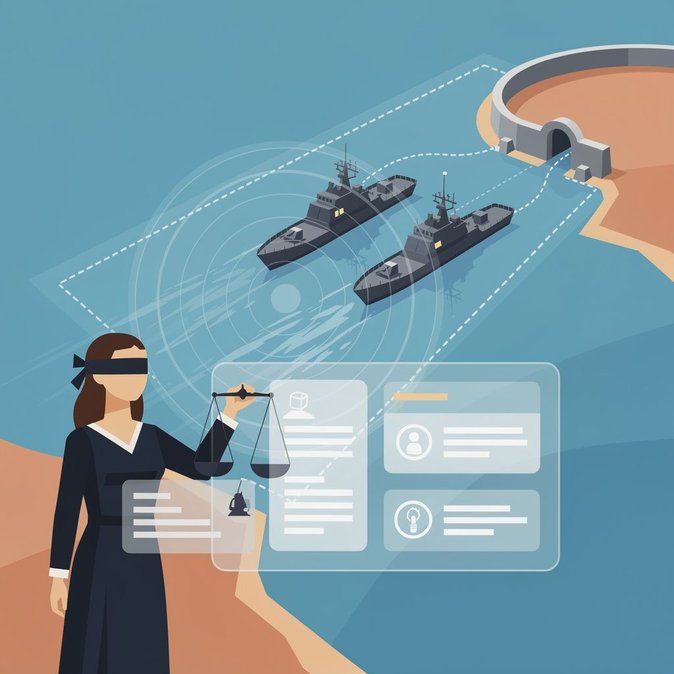
Spain’s National Court judge María Tardón has intensified the investigation into the 80,000-strong mass entry of migrants that overwhelmed Ceuta at the end of July by formally requesting the Ministry of Defence to deliver a detailed log of any Moroccan Navy vessels that may have entered Spanish territorial waters between 29 July and 10 August. The order, issued on 21 October, asks Defence to specify dates, times and precise positions of all Moroccan warships detected, after press reports suggested patrol boats may have sailed unusually close to Ceuta as the influx unfolded. Although the judge stresses that “no causal link can yet be inferred”, the request signals a widening of the probe beyond police and civil-guard actions to possible international-relations factors. Legal experts say that, if Moroccan naval movements are shown to have facilitated or failed to deter crossings, Spain could invoke bilateral maritime-security protocols or raise the matter within the EU’s integrated border-management framework. The Ceuta inquiry is already examining command-and-control decisions by Spain’s Guardia Civil and the rapid deployment of 900 troops under Operation Baluarte. Witness testimony has highlighted coordination problems and shortages of Arabic and French interpreters that slowed screening and asylum triage in the first 72 hours of the crisis. For companies that post staff to Ceuta or route supply chains through Algeciras, the outcome matters: a finding of foreign interference could prompt Madrid to reinforce maritime surveillance and to demand EU financing for permanent Frontex assets in the Strait of Gibraltar, potentially tightening checks on commercial traffic. Multinationals should plan for sporadic delays and ensure transport contracts include force-majeure clauses linked to security incidents. In the short term, the Defence Ministry must deliver the requested data within ten working days; failure to comply would allow Judge Tardón to subpoena naval officers directly. The next procedural step is a joint hearing with Guardia Civil commanders in November, where the ship-movement records are expected to be scrutinised alongside drone footage and radar logs.
Source: El País