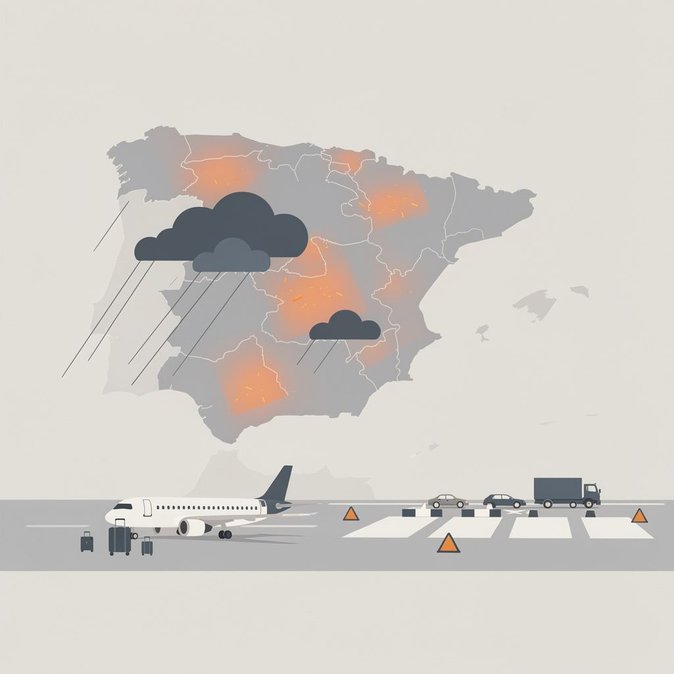
A powerful Atlantic front dubbed Storm Austen swept the Iberian Peninsula overnight, bringing torrential rain, gale-force winds and seven-metre waves to much of northern and eastern Spain. According to the State Meteorological Agency (AEMET), orange weather alerts were active from late 22 October until the morning of 23 October, with the heaviest rainfall recorded in Galicia and the Basque Country, while coastal flooding hit parts of Valencia and the Balearic Islands. Ibiza Airport reported standing water on the apron that forced several diversions to Palma and Barcelona in the early hours of Friday. Flight-tracking data show more than 60 delays and a dozen cancellations nationwide, concentrated at Josep Tarradellas Barcelona-El Prat (BCN) and Madrid-Barajas (MAD). Rail operator Renfe activated its contingency plan on the north-coast line, warning of speed restrictions and potential service cuts, while the Directorate-General of Traffic (DGT) closed or limited heavy-vehicle movements on sections of the AP-8 and N-634. For mobility managers the disruption underlines the importance of multi-channel monitoring: airlines waived change fees for same-day rebooking, but hotel and ground-transport providers varied in their force-majeure policies. Companies with tight project timelines in the automotive and renewable-energy corridors of Navarra and Gipuzkoa should review alternative routing via Bilbao or Zaragoza, and consider remote-work contingencies for staff already on-site. Although AEMET expects the front to clear the peninsula by early Saturday, residual swell and debris on secondary roads could hamper weekend transfers. Business travellers scheduled to connect onward via France should also factor in possible knock-on effects: Météo-France has issued its own wind warnings for the Pyrénées-Atlantiques. Longer-term, the episode adds weight to calls from Spain’s airport operator AENA for accelerated investment in storm-water infrastructure at regional hubs such as Ibiza and Reus, both of which have seen repeated weather-related closures since 2024. Multinationals with high traveller volumes to those locations may want to update risk registers and duty-of-care protocols accordingly.