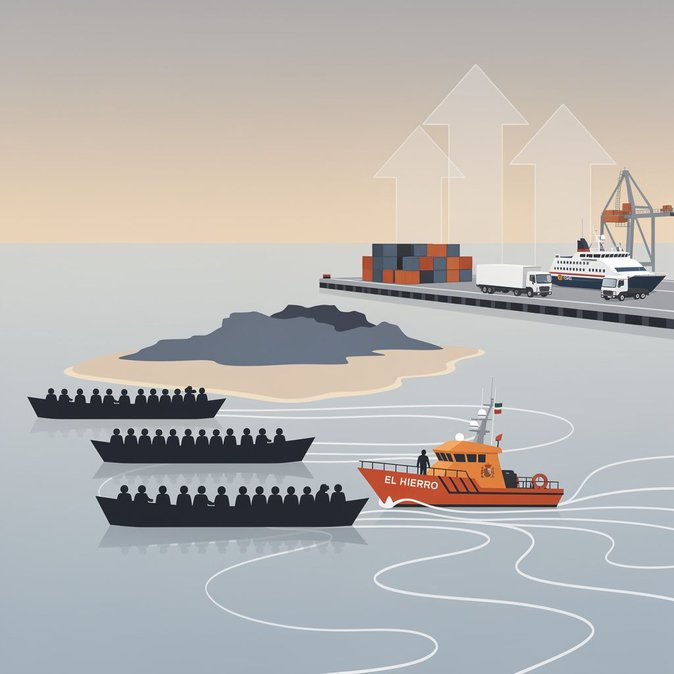
Spain’s Maritime Rescue Service has confirmed that three cayucos carrying 416 people were escorted into the port of La Restinga, El Hierro, on Friday, 23 October. The landings push total arrivals in the Canary Islands to over 800 within a 24-hour window, underlining the renewed pressure on Spain’s Atlantic migration route. The first craft, located 32 nautical miles south of the island, held 205 passengers—including eleven women and seventeen minors—who reported a seven-day voyage from Barra, Gambia. Two further boats, intercepted 44 and 14 miles offshore, brought 170 and 41 people respectively, most from Senegal, Gambia, Guinea-Bissau, Mali and Ghana. All were transferred to the port reception area, where Red Cross and Canary Islands emergency teams performed health screenings; no one required hospitalisation. Friday’s rescues follow four cayuco arrivals the previous day and bring October’s tally above 8,000, according to regional officials. Although the Spanish government says overall Atlantic arrivals have fallen 30 per cent year-on-year, capacity at El Hierro’s temporary processing site is again stretched. Many new arrivals will be airlifted to mainland reception centres over the weekend to prevent overcrowding. For employers the surge has practical implications. Assignment managers relocating staff to the Canaries—particularly in the booming renewable-energy and tech-outsourcing sectors—should anticipate sporadic flight or ferry disruptions as port authorities prioritise humanitarian operations. Companies that rely on just-in-time maritime freight should also monitor potential diversions of Salvamento Marítimo assets, which can delay commercial shipping lanes around Tenerife and Gran Canaria. At policy level, Madrid faces renewed calls from the Canary government for an EU solidarity mechanism and faster asylum processing. Corporate mobility teams should track any emergency decrees that alter registration, residence or work-authorisation timelines for non-EU nationals rescued in Spanish waters, as such changes can affect sponsorship strategies and labour-market testing.
Source: El Diario CanariasAhora