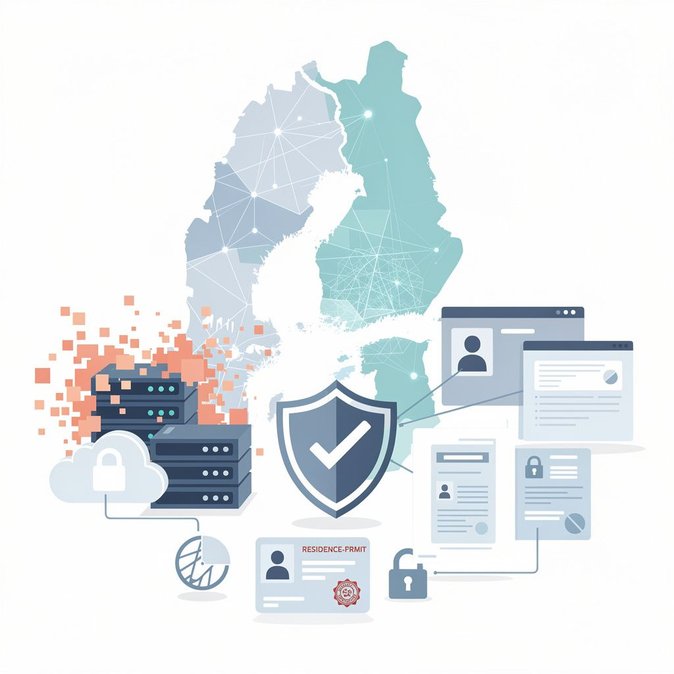
The Digital and Population Data Services Agency (DVV) announced on 30 October 2026 that a record 399 organisations—including ministries, municipalities, banks and health-care providers—will participate in the annual Taisto cyber-exercise scheduled for 7–8 November. The tabletop and live-simulation drill tests how teams respond to large-scale digital disruptions that could paralyse online public services used daily by citizens, foreign residents and travellers. DVV says last month’s CVE-2026-5601 vulnerability, which forced several Finnish government portals offline, underscores the need for whole-of-organisation readiness. This year’s scenario will simulate simultaneous ransomware hits on key identity and border-management systems, requiring participants to restore access to the population-information system, residence-permit databases and the Suomi.fi authentication gateway. For multinational companies the relevance is immediate: the same infrastructure underpins work-permit decisions, address registration, social-security enrolment and the new digital D-visa collection process for non-EU employees. A prolonged outage would thus cascade into relocation timetables, payroll onboarding and tax-number issuance. DVV encourages private-sector HR and mobility teams to review their own continuity plans, including alternative identification methods and offline document workflows. Insights from Taisto exercises often translate quickly into policy. After last year’s drill DVV accelerated deployment of offline eID readers at border checkpoints, reducing queue times for travellers during temporary outages. Observers expect 2026 lessons to feed into the forthcoming Digital Identity Act, due before Parliament in December, which will make the mobile national ID mandatory for many immigration and customs transactions.