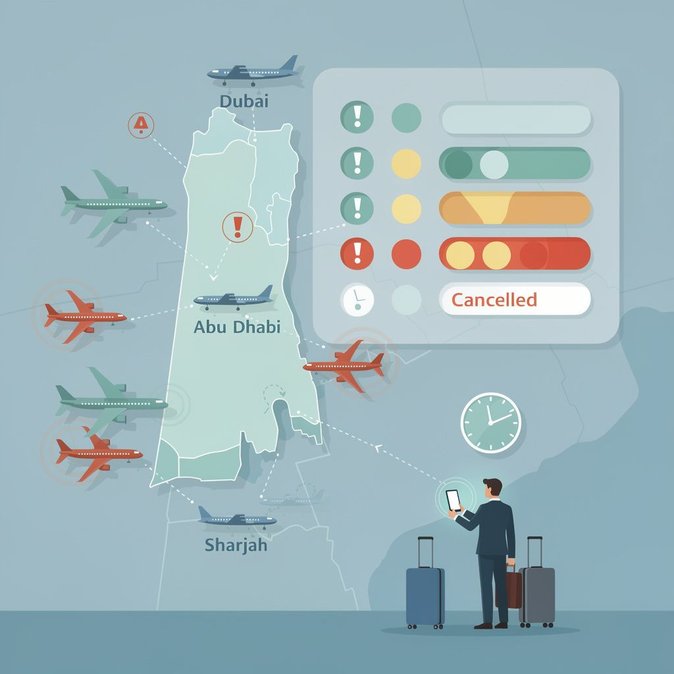
Gulf News published its rolling flight-status update for 11 November, detailing another day of disruption across UAE airports as regional security tensions continue to affect commercial aviation. The bulletin shows multiple cancellations on UAE–Saudi routes – traditionally among the busiest for business traffic – with Etihad grounding all Abu Dhabi–Riyadh and Dammam services until at least 19 November and Emirates cancelling six Dubai–Saudi rotations during the day. flydubai data reveal four cancelled Dammam flights and an ongoing suspension of Riyadh and Abha services through 16 November. Air Arabia’s Sharjah hub also felt the pinch, pulling selected Riyadh and Abha flights. While some Jeddah and Medina services are operating, the message to travellers is clear: a confirmed booking does not guarantee the flight will operate. The General Civil Aviation Authority’s restriction on Iranian-carrier operations remains in place, and UAE–Israel flights are following airline-specific risk protocols that keep flydubai and Emirates out of Tel Aviv for now, even as Etihad continues a reduced Abu Dhabi schedule. Beyond the GCC, the update collates longer-term suspensions by European, Asian and North American airlines. Singapore Airlines has pushed back its Dubai return to February 2027; Cathay Pacific until January 2027; Air Canada until March 2027; and KLM until late March. Conversely, Lufthansa Group airlines and Austrian Airlines still plan tentative Dubai restarts from 25 November and 12 December respectively, subject to air-space developments. For corporate mobility teams the granular list is a practical planning tool. Companies relocating staff or flying project teams into the kingdom are booking flexible tickets, adding stop-over cushions, and advising travellers to allow four hours at check-in. Procurement departments are reassessing service-level agreements with TMCs to cover same-day re-ticketing and hotel contingencies. Employers are also reminding mobile workers that UAE residence visas require re-entry within 180 days – a rule now tested by unpredictable flight networks. The piece closes with a checklist: verify flight numbers directly with airlines, arrive early, keep mobile contact details updated, and monitor government advisories. With conflict-zone bulletins from the European Union Aviation Safety Agency valid until 16 November, mobility managers should expect the rolling disruption cycle to last at least through month-end.
Source: Gulf News