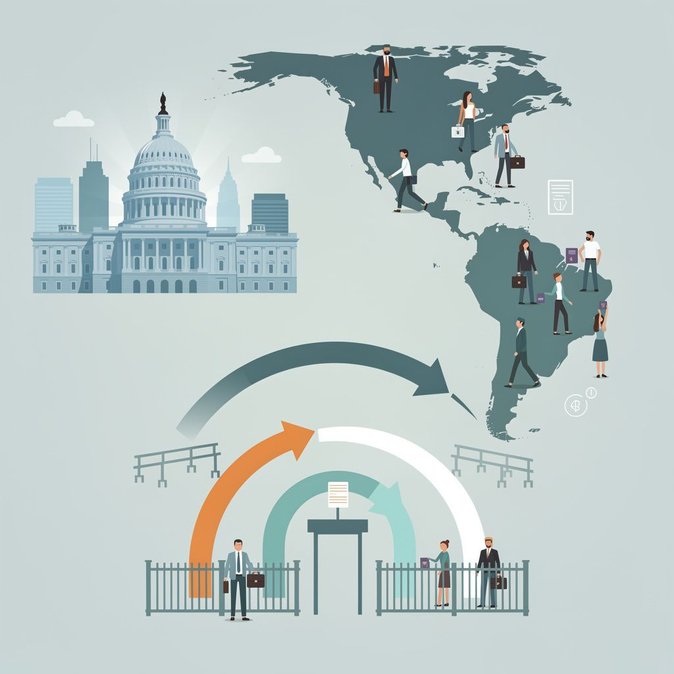
With Democrats poised to take over both chambers of Congress in January, policy researchers are debating how the new political balance will influence President Trump’s approach to Latin America—particularly on migration, security cooperation and regional labor flows. Speaking to reporters on November 11, administration officials insisted that existing asylum restrictions at the U.S.–Mexico border will stay in place, yet analysts expect negotiations on targeted legal pathways and foreign-aid conditionality to gain traction early in the new session. Historically, the executive branch has used bilateral agreements with Mexico and Central American governments to externalize border enforcement—funding checkpoints, repatriation flights and refugee-screening programs far south of the Río Grande. Democrats, however, campaigned on expanding humanitarian parole and seasonal-worker visas while scrutinizing human-rights records tied to U.S. security aid. “Mexico offers the fastest route to measurable results,” said Mexico-based security scholar David Saucedo, noting that any shift in congressional funding could quickly pressure Mexican authorities to alter detention and transit-visa practices. Businesses with cross-border supply chains and expatriate workforces should watch three levers: (1) Whether Congress links future foreign-military financing to migrant-protection benchmarks; (2) Prospects for expanding H-2B and TN visa quotas to mitigate farm-labor and engineering shortages; and (3) Possible revival of a parole-in-place program for Venezuelan and Cuban professionals that stalled earlier this year. Each scenario would directly affect talent deployment, project staffing and cost modeling for U.S. companies operating in the hemisphere. Even limited policy adjustments could ripple quickly. If Mexico tightens south-north transit, U.S. ports of entry may see fewer asylum claims, easing pressure on Customs and Border Protection (CBP) field staffing—but increasing demand for employer-sponsored visas. Conversely, a broadened humanitarian parole program could speed travel permissions for certain nationalities, shortening lead times for project mobilization but also raising on-boarding compliance requirements. Stakeholders should brief senior leadership on emerging congressional proposals, budget riders and potential executive actions that could redefine regional mobility over the next six months. Scenario planning now—before new committee chairs set their agendas—will give global mobility teams a strategic head start.
Source: Associated Press