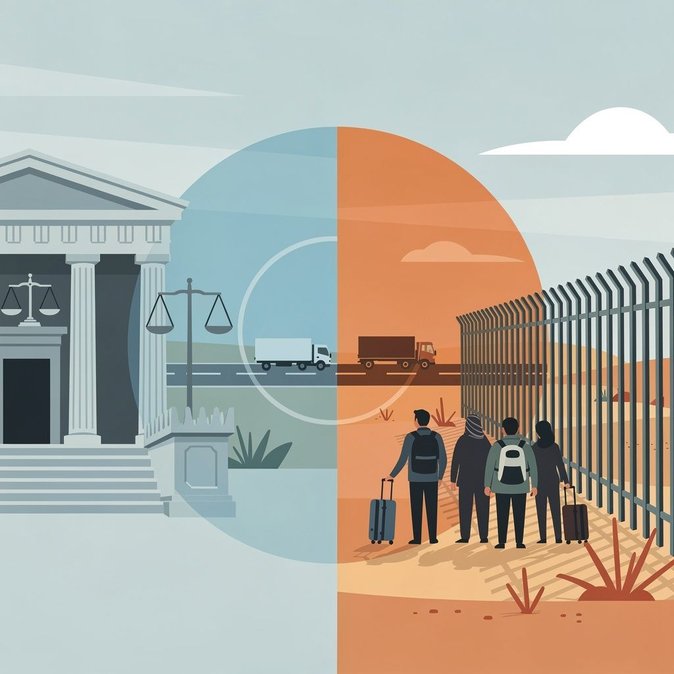
The U.S. Supreme Court agreed on Friday, 13 November 2026, to hear a high-stakes challenge to President Donald Trump’s executive order that temporarily blocks most asylum applications filed at land ports along the Mexican border. The administration argues that the blanket ban—first issued in May 2025 as part of a broader border-security crackdown—has driven a 93 percent drop in attempted crossings by removing the incentive to lodge claims that can take years to adjudicate. Immigrant-rights groups, led by the American Civil Liberties Union and the National Immigrant Justice Center, contend the order violates long-standing statutory protections that guarantee any person on U.S. soil the right to seek asylum, regardless of how they arrived. Two lower federal courts have agreed, calling the ban an unconstitutional attempt to “invent by fiat a new removal system.” For multinational employers, the outcome could reshape humanitarian parole and work-authorization pipelines. Companies that rely on cross-border talent exchanges—particularly in maquiladora, logistics and energy sectors in Texas, Arizona and California—face continued uncertainty about whether staff can accompany family members seeking protection in the United States. Corporations also worry that tighter asylum rules may create bottlenecks at ports of entry, slowing the movement of goods and personnel. The justices will hear oral arguments in the spring and are expected to rule by late June 2027. If the court overturns the lower rulings, the administration is likely to make the policy permanent. If it upholds them, Customs and Border Protection would have to resume processing tens of thousands of backlogged claims, a move that could strain staffing and detention capacity at the border.
Source: Associated Press