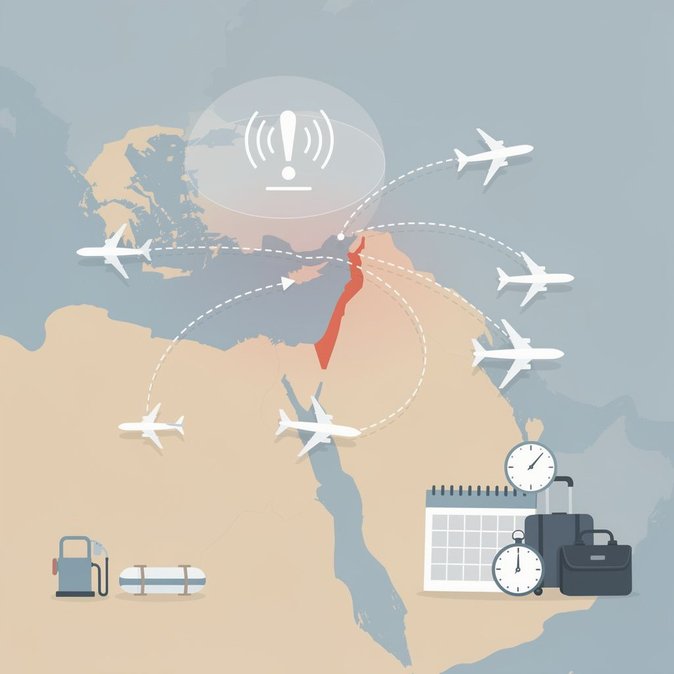
Business travellers flying to or over the United Arab Emirates this week will need to factor in a fresh extension of the European Union Aviation Safety Agency’s (EASA) conflict-zone bulletin CZIB-2026-07R3. In an update published on 15 November, EASA prolonged its caution against operations in the flight-information regions of the UAE, Bahrain, Kuwait, Qatar and Oman until 16 November 2026 and reiterated separate restrictions for Jordanian airspace. Although the notice is advisory for non-European carriers, many international airlines use EASA guidance as a benchmark when drafting their own risk assessments. Etihad Airways, flydubai and several European legacy carriers are already operating modified routings and fuel planning to keep adequate separation from sensitive airspace. The alert also comes as GPS-interference and drone activity continue to be reported across parts of the Gulf, issues that have caused multiple carriers to file contingency flight plans and, in some cases, lengthen block times by up to 25 minutes. For multinational companies moving staff or cargo through Dubai or Abu Dhabi hubs, the key implication is scheduling volatility. Dispatchers should double-check slot allocations, ensure crews have additional fuel uplift, and monitor the NOTAM stream for last-minute airway closures. Travellers transiting between Europe and Asia via the Gulf may see short-notice delays or diversions—particularly on night-bank departures when traffic is heaviest. Risk managers are recommending that corporate travellers register with their airlines’ SMS alert systems and carry at least one day of schedule flexibility. Mobility teams are also advising employees to keep hotel and ground-transport reservations fully refundable through 17 November in case of extended disruption. While UAE airports remain fully operational, the extended EASA bulletin underscores that regional geopolitics can still ripple through the country’s otherwise robust aviation infrastructure.
Source: UECN – Middle East Travel Alerts