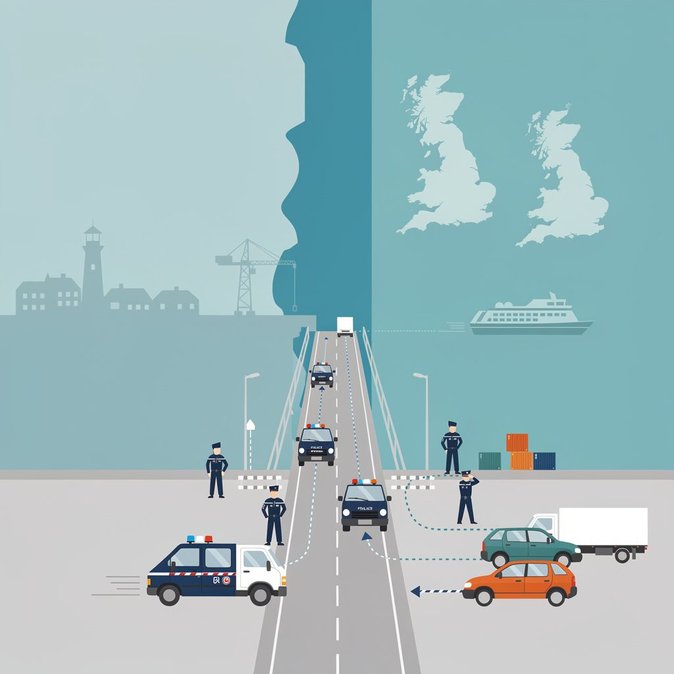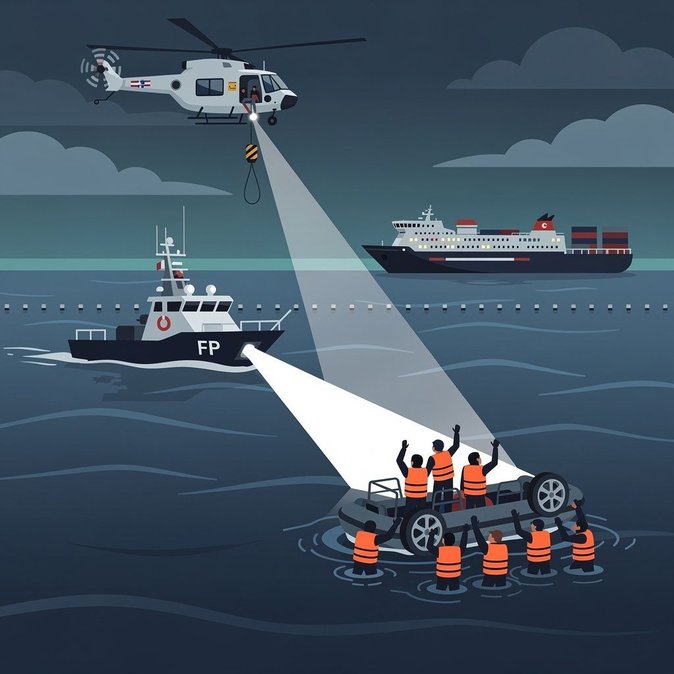
French search-and-rescue units were scrambled late on 14 November after an overcrowded dinghy carrying close to 90 irregular migrants capsized in the French Search-and-Rescue Region just north-west of Calais. According to the Préfecture maritime de la Manche et de la mer du Nord, the CROSS Gris-Nez coordination centre deployed a Dauphin navy helicopter, a gendarmerie EC-135, the public-service patrol vessel Pluvier, SeaOwl’s rescue ship Minck and a British Border Force craft. Eighty-seven people were pulled from the water; one person remains missing and a second is in critical condition in Calais hospital. Cross-Channel rescue capacity has been reinforced since a spate of fatal incidents in 2025, but this is the first major winter accident of the 2026–27 migration season. Officials say the rigid-hull inflatable departed a beach near Ambleteuse at dusk, attempting to reach UK waters before predicted northerly gales made crossings impossible. Water temperatures were 9 °C; most occupants wore no life-jackets. Maritime prefect François-Xavier Lauch said the incident illustrates the "industrial scale" of smuggling networks and called again for EU-level action to dismantle criminal logistics upstream. French prosecutors have opened an investigation for manslaughter and facilitating illegal immigration. Gendarmerie patrols have already increased night-time surveillance on dunes between Calais and Boulogne, using thermal drones and all-terrain vehicles. Ferry operators DFDS and P&O report no schedule impact but warn that any extended search perimeter triggers mandatory slow-steaming zones, adding 15–20 minutes to sailings. Eurotunnel Freight issued a driver advisory urging caution on the A16 approaches where emergency vehicles are operating. Employers with posted workers or HGV drivers using the Short Straits route over the next 48 hours should monitor maritime bulletins and allow additional buffer time. In the medium term, the accident may stiffen French resolve to keep internal Schengen border checks in place through April 2027 and could re-ignite negotiations with the United Kingdom over joint aerial surveillance funding. Companies moving staff between the UK and mainland Europe should expect continued police presence on coastal roads and possible ad-hoc controls at embarkation points.