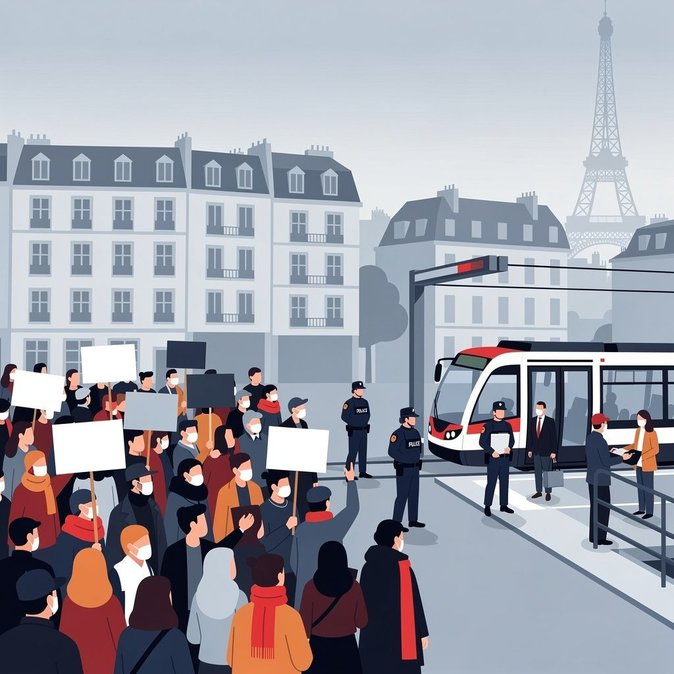
France’s fifth nationwide “cost-of-living” protest drew an estimated 106,000 demonstrators on Saturday 14 November, including 24,000 in Paris and 8,000 in Lyon. Le Monde reports that the marches—led by student unions, Yellow-Vest activists and left-wing parties—were accompanied by an unusually visible security apparatus as authorities brace for Senate debate on a controversial police self-defence bill. Riot units walked directly in front of the main Paris banner and helicopters monitored the route. Le Parisien confirms that preventive identity checks around Place de la République resulted in 126 arrests in Paris (40 minors) and 404 nationwide. Police prefect Laurent Nuñez said the tactic was intended to deter “cortèges sauvages” (wildcat marches) that have previously spilled onto ring roads. Fifty security personnel were injured across France. For mobility managers the immediate impact was limited to localized bus detours and short closures of Metro lines 2 and 9 near Bastille, but authorities warn that further student-led blockades are planned for 17 November. Businesses with inbound travellers should monitor real-time RATP alerts and consider routing ground transport away from protest hotspots. Hoteliers around Nation report cancellations from corporate guests concerned about evening access, while ride-hailing platforms applied congestion surcharges of up to 2.1× in central Paris. Lyon’s tram line T2 was halted for 40 minutes after debris was set alight on tracks at Jean-Macé, illustrating the knock-on effect such protests can have on urban transit reliability. Strategically, the policing model tested this weekend—close escort followed by rapid “nasse” containment—may foreshadow the security posture France will employ during the 2027 Presidential election cycle and the 2027 Rugby World Cup, both of which will draw significant international business travel.
Source: Le Parisien