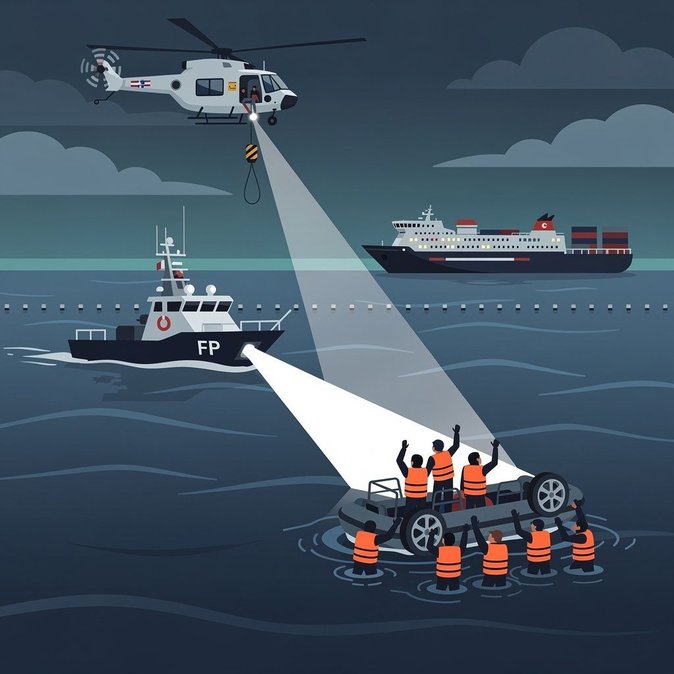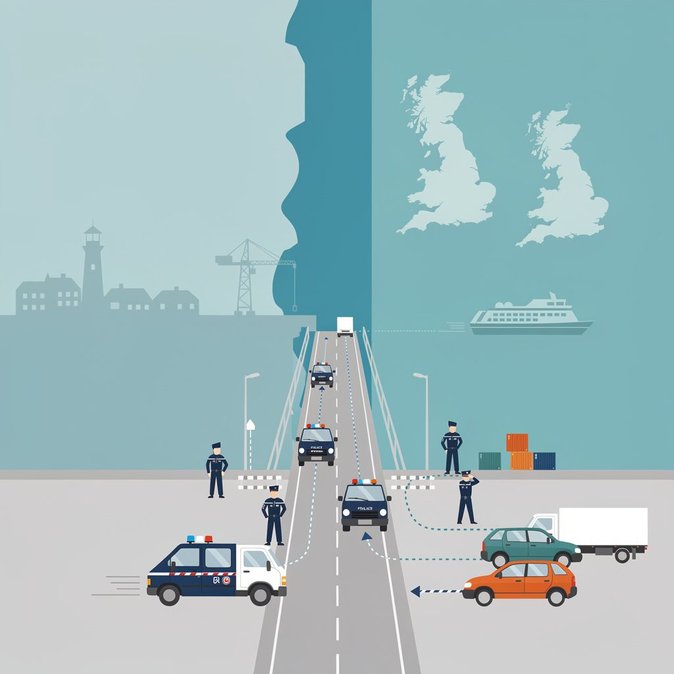
With winter gales approaching, French security services are bracing for what they describe as the last "window of opportunity" for small-boat crossings to Britain. TF1’s evening news broadcast on 15 November embedded with a Calais gendarmerie company that now conducts 24-hour dune patrols, deploying four-wheel-drive Polaris buggies, drones with infrared cameras and helicopter over-flights. Commandant Olivier Adé told reporters that smugglers are organising departures earlier in the evening to avoid harsher sea states forecast from 20 November. The push is evident in interdiction statistics: French police recorded 43 attempted launches over the past week—double the first week of October—and recovered six abandoned inflatables along the Côte d’Opale. An AFP report carried by Boursorama shows interior-ministry officials visiting Berck-sur-Mer on 13 November to review the deployment of 170 additional officers and fixed surveillance masts funded under the 2023 UK–France Joint Action Plan. For travel and logistics operators the intensified security posture has tangible consequences. Coach companies report that overnight services using the A16 are subject to spot checks that add 20–30 minutes. Port of Calais officials say embarkation processing for accompanied freight now includes vehicle-under-body scans at random, extending peak-hour waiting times by roughly one sailing cycle. Eurostar Freight has re-routed two late-night shuttles to avoid overlap with dune patrol convoys. Businesses moving talent between France and the UK should advise travellers to carry proof of accommodation and employment, as officers increasingly ask migrants and foreign-registered drivers to justify stays under the 90/180-day Schengen rule. Employers posting third-country nationals should keep A1 certificates and work permits on hand. Strategically, the surge could influence ongoing Franco-British talks on a long-discussed returns agreement. If crossings remain high through December, observers expect Paris to demand greater UK burden-sharing for rescue operations, potentially affecting post-Brexit mobility negotiations in 2027.
Source: TF1 Info