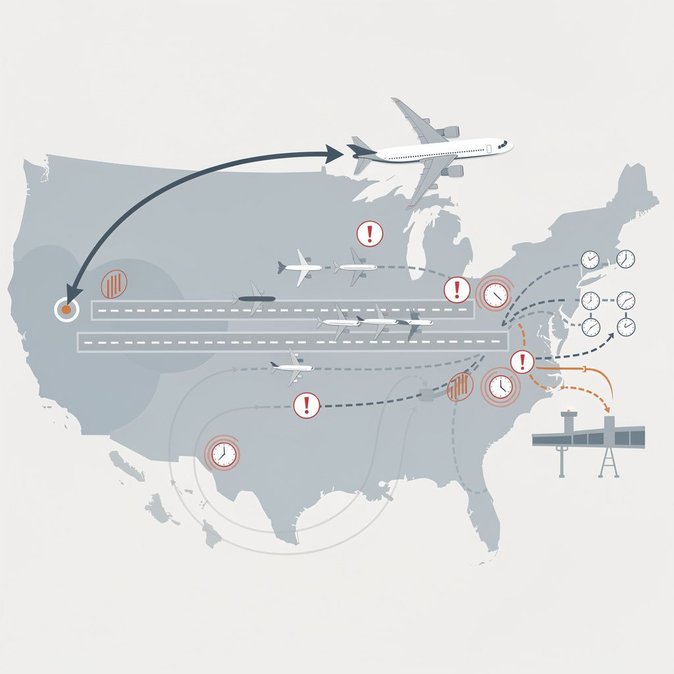
The four-hour nationwide ground stop imposed by the US Federal Aviation Administration on 13 November rippled through weekend schedules, yet data show that 16 of 17 non-stop India–US services departed as planned. Air India and United Airlines operated their flights to Delhi and Mumbai normally; only one American Airlines sector was cancelled. The picture was grimmer for Indian travellers relying on US domestic legs. By 14 November more than 6,400 internal flights had been cancelled, causing thousands of missed connections. Passengers entering via New York, Chicago or Dallas found rebooking queues stretching several hours, with hotels in hub cities selling out. The disruption stemmed from a contractor replacing copper lines with fibre optics; a mis-configured router flooded the air-traffic network with link requests, forcing controllers to halt departures. While the FAA ruled out a cyberattack, the incident has reignited debate over ageing infrastructure and contingency planning—issues that matter to Indian IT firms with staff shuttling between development centres and US clients. Travel insurers are treating the event as ‘carrier-caused’ rather than weather, meaning policyholders may claim reasonable expenses. Airlines must also provide refunds if passengers decline re-routing, including on foreign carriers such as Air India. With schedules now stabilising, mobility managers are reviewing buffer times on future itineraries, especially for H-1B, L-1 and B-1 travellers who need to reach secondary US cities after clearing immigration at gateway airports.
Source: The Financial Express