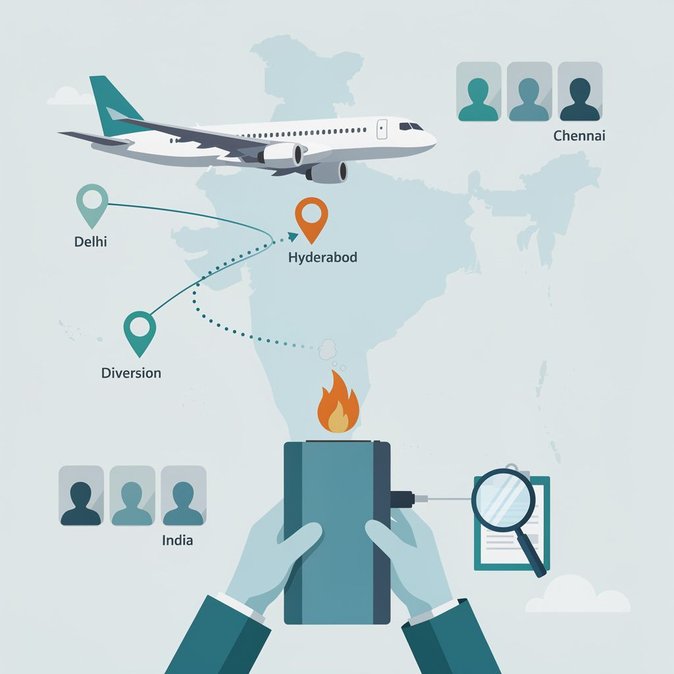
IndiGo flight 6E 6115, operating a routinely busy morning sector between Delhi and Chennai, declared a precautionary diversion on 11 October after smoke and flames erupted from a passenger’s power bank soon after take-off. Cabin crew deployed fire-extinguishers, contained the device in a thermal bag and reported the incident to the cockpit, where the commander opted to land in Hyderabad within 25 minutes. All 191 passengers and crew disembarked safely; the flight later continued to Chennai after the aircraft was inspected and certified serviceable. Although no injuries occurred, the episode is the carrier’s third lithium-battery fire in 12 months and reignites questions about how well Indian airlines and airports enforce DGCA Circular 11-2025, which mandates that power banks travel only in cabin baggage and remain unplugged inflight. Aviation-safety analysts say India now handles almost 170 million domestic passengers a year and that battery-related events are rising in line with smartphone penetration. The Hyderabad diversion spared Delhi—whose single-runway operations were already stretched by monsoon delays—from another airborne emergency. Corporate travel managers should remind staff to keep power banks accessible, never charge them onboard and use only certified equipment. Airlines can expect the DGCA to intensify ramp inspections and to insist on live-fire drills during recurrent crew training. For expatriate assignees who routinely carry multiple devices, non-compliance could lead to fines or, in serious cases, a blacklist under India’s Civil Aviation Requirements. For now, the incident is a wake-up call: in an era of battery-powered everything, a pocket-sized charger can still upend an entire day’s network schedule—and every traveller’s meeting calendar.
Source: Hindustan Times