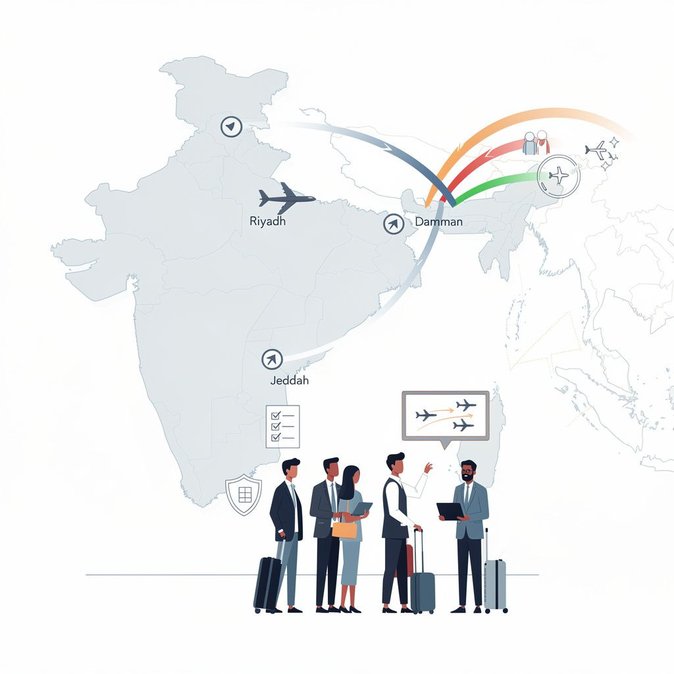
Indian travellers to the Gulf face an extended disruption after multiple domestic airlines prolonged their Saudi Arabia suspensions. Air India Express, the country’s largest budget wide-body operator to the Middle East, confirmed on 20 October that all flights to and from Riyadh, Jeddah and Dammam will remain grounded until at least 24 October. The move follows a 17 October group statement citing continuing security uncertainties around Riyadh’s King Khalid International Airport despite its formal re-opening on 18 October. A Reuters fact-box published early on 20 October shows that IndiGo—the largest Indian airline by market share—has matched the extension, while Akasa Air has halted Riyadh services until 24 October and Jeddah flights until 21 October. Full-service flag carrier Air India continues its own suspension through 24 October. International carriers including Lufthansa, KLM and Qatar Airways have issued similar advisories, underscoring the region-wide impact of the escalating Yemen-linked drone attacks. For corporate mobility managers, the rolling extensions complicate crew rotations and project timelines across the energy, construction and IT maintenance sectors that rely on the high-frequency India-Saudi corridor. Employers are scrambling to re-route travellers via Dubai, Doha or Bahrain—adding transit visas, hotel costs and potential duty-of-care issues if the geopolitical situation deteriorates further. Airlines say affected passengers can seek complimentary rescheduling or full refunds, but inventory on alternative carriers is tightening. Travel managers should instruct assignees to verify flight status within 24 hours of departure and register with India’s MADAD or the company’s travel-risk platform for real-time alerts. Insurance policies need to be reviewed for war-risk exclusions, as many plans do not automatically cover cancellations triggered by government advisories. Looking ahead, Indian civil-aviation authorities may issue their own NOTAMs if security threats persist. Companies with critical Gulf operations are advised to map essential personnel, arrange remote-work contingencies where feasible, and brief staff on situational awareness should travel resume before a full de-escalation.
Source: Wego Travel Blog