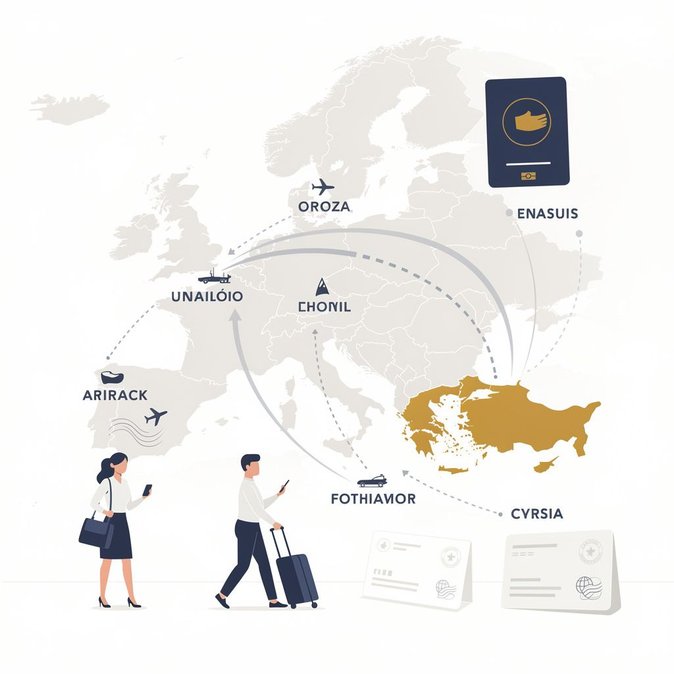
Speaking to reporters in Dublin, President Nikos Christodoulides reaffirmed that Cyprus has met all technical criteria to join the passport-free Schengen Area and that discussions in EU working groups are advancing without objections from other member states. The comments, published on 16 November, follow an informal European Council meeting where enlargement, migration management and artificial intelligence were on the agenda. Cyprus and Ireland remain the only EU countries outside Schengen. Christodoulides argued that accession would mirror the strategic importance of adopting the euro in 2008, placing Cyprus “at the core of Europe” and strengthening both security cooperation and tourism competitiveness. The government now targets 2027 for full entry, one year later than earlier ambitions, aligning the milestone with Greece’s EU Council presidency. From a global-mobility perspective, Schengen membership would fundamentally change how companies base staff on the island. Third-country nationals holding Cypriot residence permits would gain visa-free access to 29 other European states for short business trips—eliminating today’s need for multiple C visas—and Cypriot-issued short-stay visas would become valid across the zone. Conversely, Cyprus would have to apply the Entry/Exit System (EES) and ETIAS at its sea and air borders, requiring new biometric infrastructure at Larnaca, Pafos and the Limassol cruise terminal. Legal advisers caution that the Green Line Regulation will continue to govern movement between the government-controlled south and the Turkish-controlled north. Companies relocating staff therefore need to update posted-worker policies and ensure that any cross-border commuting complies with both Schengen rules and the separate regime applicable to the buffer zone. Brussels insiders say the final political hurdle is unanimity in the Council. While no member state has formally vetoed Cyprus, some, including Austria and the Netherlands, have previously linked enlargement to migration-flow assurances. Christodoulides emphasised that Cyprus records minimal secondary movements, a point intended to reassure sceptical capitals ahead of the decisive vote.
Source: Greek City Times