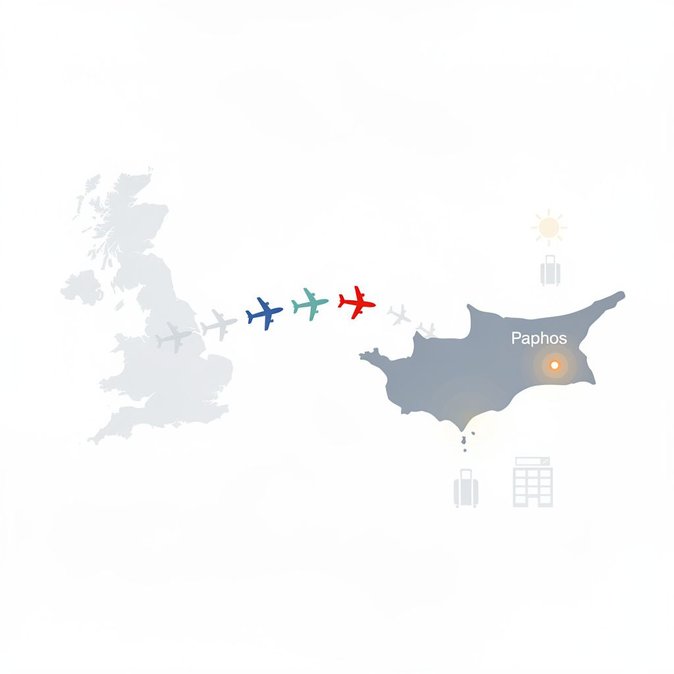
Cyprus has moved one step closer to Schengen membership after President Nikos Christodoulides publicly confirmed that Nicosia and Athens are working toward lifting all internal border checks on 1 July 2027 – the first day of the Greek Presidency of the Council of the EU. Speaking to Cypriot media during a visit to Dublin on 12 November, the President said that most objections from other member states “have largely been overcome” and that only a final unanimous Council decision is still missing. Technically, Cyprus already applies large parts of the Schengen rule-book. Council Decision (EU) 2023/870 switched on the Schengen Information System (SIS) in the Republic on 25 July 2023, and the Commission’s 2025-26 Schengen country report, adopted in July, found Cyprus ready across all evaluated chapters. What is still required is a separate Council Implementing Decision under Article 3(2) of the 2003 Act of Accession. That decision would set the date for lifting checks at airports, seaports and – uniquely in the EU – at the so-called Green Line separating the government-controlled south from the Turkish-Cypriot north. A central unresolved question is how the EU’s new biometric Entry/Exit System (EES) will interact with the Green Line. Because the line is not an external border, Cyprus cannot apply the EES there without an amendment to EU law. Officials are therefore examining alternative solutions, including pre-departure checks at Larnaca and Paphos airports and enhanced surveillance of the line itself. The Foreign Ministry has also begun consultations with the United Kingdom to ensure equivalent controls at the Pergamos and Strovilia crossing points inside the UK’s Eastern Sovereign Base Area. For businesses, full Schengen participation would eliminate systematic passport checks on flights to and from the rest of Europe, cutting connection times and simplifying corporate mobility. Cyprus-issued residence permits would automatically allow visa-free travel throughout the zone, a significant perk for multinationals relocating talent to the island. Until a Council decision is adopted, however, nothing changes: Cyprus remains outside Schengen, its visas are valid only for the Republic, and travellers must still respect the 90/180-day rule when shuttling between Cyprus and the Schengen area. Companies should therefore brief employees that the 1 July 2027 date is aspirational, monitor the Justice and Home Affairs (JHA) Council agendas – the next meeting is scheduled for 3-4 December – and build flexibility into assignment planning. Immigration advisers recommend keeping paper entry stamps, as Cyprus is not yet connected to the EES. Airlines and tour operators should also prepare for a short period of dual procedures around 2027, when Cypriot airports convert from national to Schengen external-border status.
Source: Lawzana