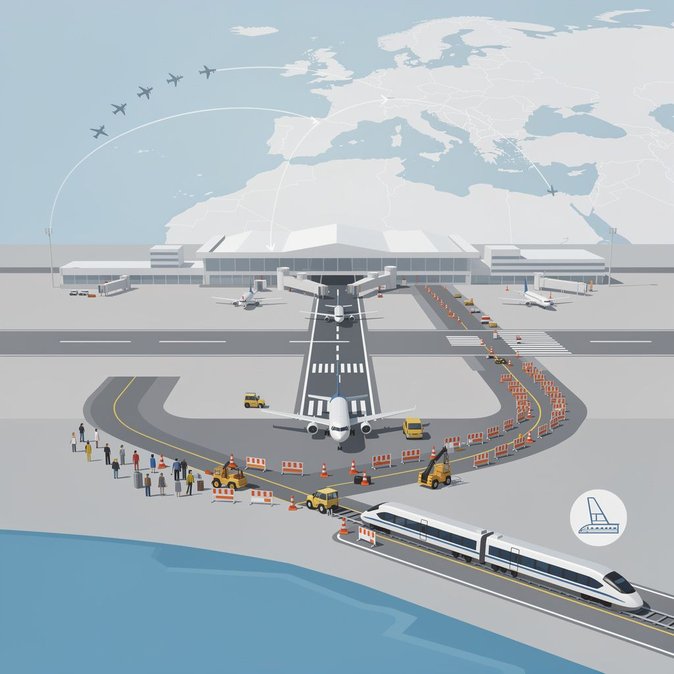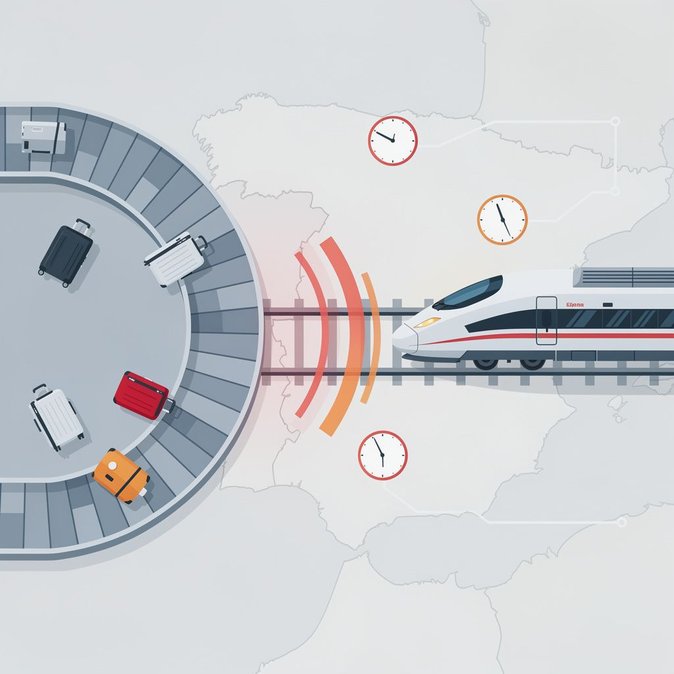
Spain’s Monday morning business-travel rush began with fresh disruption at Madrid’s Adolfo Suárez Madrid-Barajas Airport (MAD): maintenance workers responsible for the SATE automated baggage-handling system continued partial stoppages that have run five days a week since March. Travellers reported 30- to 45-minute waits at reclaim belts in Terminals 1 and 4, although Aena confirmed all departure belts were operating after 10:00 local time. The Alternativa Sindical de Clase (ASC) union says talks with the subcontractor remain stalled over weekend-shift premiums. While the airport action is classified as “minor” by independent tracker StrikeTracker, it compounds a jittery mobility picture: tomorrow, 17 November, infrastructure company Adif and the SEMAF drivers’ union will stage a 24-hour nationwide rail strike that obliges Renfe, Iryo and Ouigo to run at reduced capacity (72 % of long-distance AVE, 75 % of Cercanías in peak hours). Airlines have added last-minute domestic capacity—Vueling loaded 3,400 extra seats on the Barcelona-Madrid shuttle—and hotel chains near conference venues in Madrid warn of early check-in bottlenecks as delegates shift arrival dates. For global-mobility managers the twin strikes underline the need for contingency planning in Spain’s multimodal network. Companies relocating staff this week are advising hand luggage only and booking flexible tickets that can convert to coach or air if rail services collapse. Mobility-tax experts also point to a budgetary angle: extended taxi waits due to baggage delays count as taxable fringe benefits in Spain when reimbursed, so HR should instruct travellers to log disruption-related costs separately. Spanish law mandates minimum services for essential transport, but enforcement varies by region. Employers sending staff into Spain during the winter bargaining season—when ground-handling, air-traffic control and metro disputes traditionally flare—should build a rolling strike calendar into travel approvals and clarify force-majeure clauses in assignment letters. Talks between ASC and the maintenance contractor resume on 22 November under regional-government mediation. If no deal is reached, the union threatens full-day stoppages over the peak Christmas period—a prospect that could ripple through global supply chains relying on Barajas’ growing pharma-cargo traffic.
Source: StrikeTracker