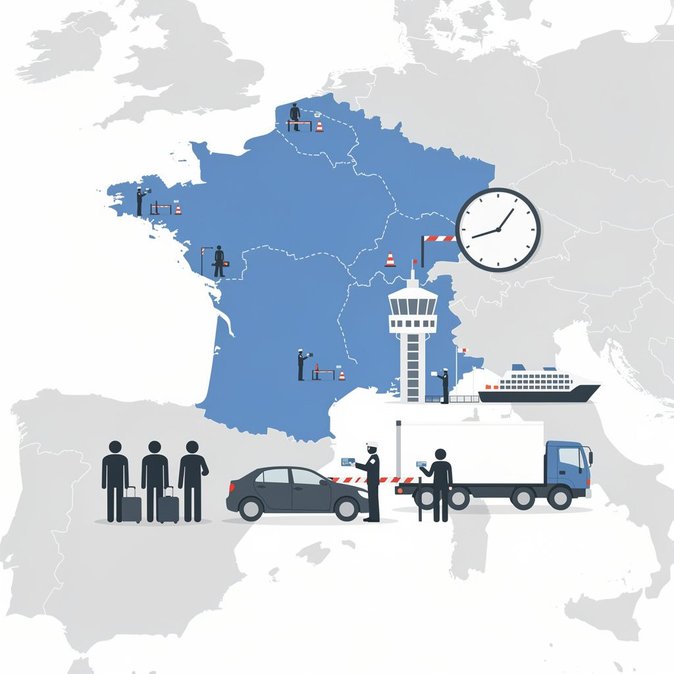
An updated European Commission list published on 16 November confirms that France will maintain temporary controls at all of its internal Schengen borders—land, air and sea—until 30 April 2027. The checks, in force since 1 November, cover crossings with Belgium, Germany, Luxembourg, Switzerland, Spain and Italy as well as juxtaposed controls in the Channel ports. Paris cites a cocktail of security threats to justify the extension: persistent jihadist risk, a spike in antisemitic incidents, organised criminal smuggling networks and concerns that radicalised actors could exploit irregular migration flows. While the legal basis is Article 25 of the Schengen Borders Code, Brussels has repeatedly urged France to adopt “proportionate police measures” instead of blanket frontier controls. In practical terms, business travellers can expect random ID checks, longer queues at secondary roads in the Ardennes and Pyrénées, and occasional stamp-outs of passports at Eurostar and ferry terminals. Airlines operating intra-EU flights to France must continue to transmit API/PNR data prior to departure. Corporations with cross-border commuters—especially in Luxembourg’s financial sector and along the Franco-German Upper Rhine—should review contingency time buffers and remind staff to carry passports or national ID cards even on day trips. Logistics firms report that the reinstated checks add 20–40 minutes per HGV crossing at peak hours in the Hauts-de-France region, jeopardising just-in-time supply chains for the automotive sector. The French interior ministry says it will evaluate the security situation “no later than mid-February 2027,” but most analysts see little political appetite to lift controls before next year’s Olympic torch relay. Although Schengen rules allow a maximum of two years of continuous internal controls, France has repeatedly renewed them since the 2015 Paris attacks by invoking different legal justifications. The Commission’s ongoing Border Code reform may tighten oversight, but for now companies must plan on at least another five months of checks.
Source: Schengen Traveler Facts Tracker