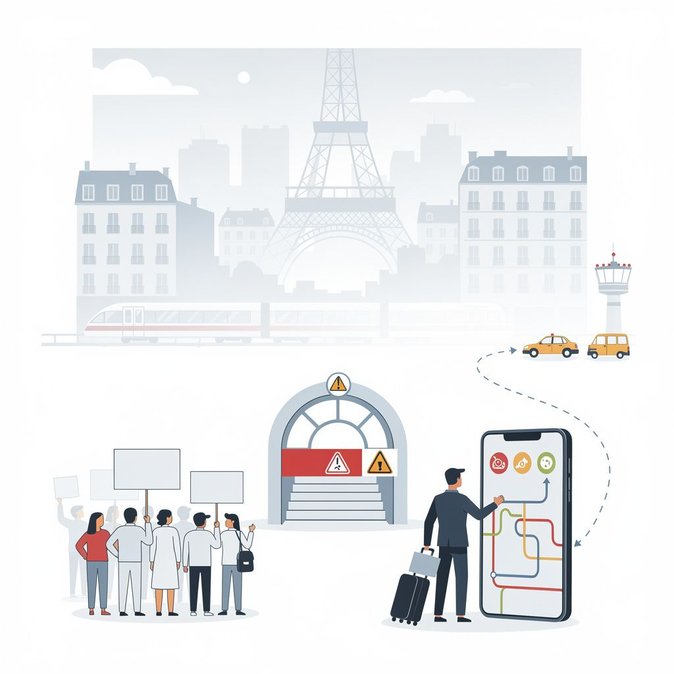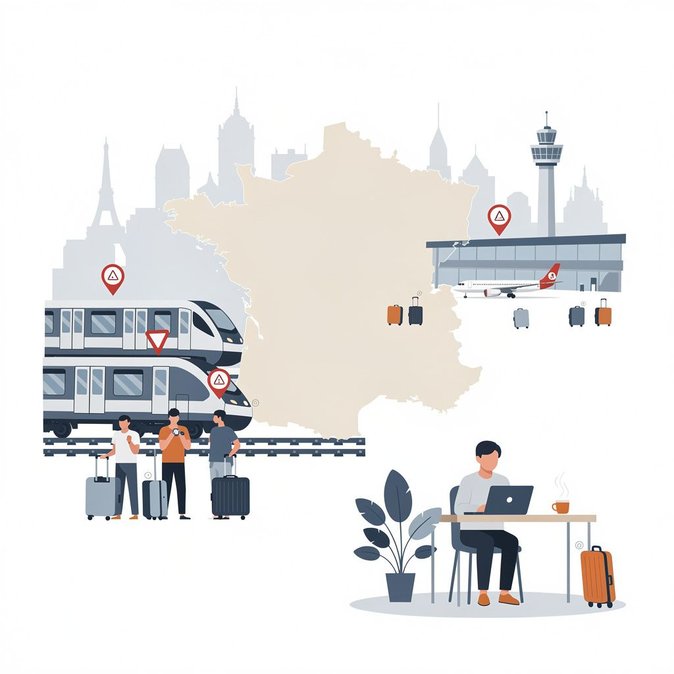
France faces another day of labour unrest on Tuesday, 17 November 2026, after six major public-service unions—CGT, FO, CFDT, UNSA, Solidaires and FSU—called a 24-hour strike over wages and purchasing power. Strike-tracking platform StrikeTracker notes the action as the only new national stoppage registered this week, with potential knock-on effects for SNCF rail services, Paris public transport and some regional airports. Under French law, air-traffic controllers must declare their intention to strike 48 hours in advance. As of noon today (16 November) no collective notice has been filed, so the Directorate-General for Civil Aviation (DGAC) has not ordered airlines to cut schedules. However, local wild-cat absences remain possible, and ground-handling staff at Marseille and Nice have hinted they will join picket lines. SNCF has warned of “targeted disruptions”, especially on TER regional lines and the Transilien commuter network around Paris, details of which will be published at 17:00 CET today. For global-mobility teams, the timing is awkward: it coincides with post-trade-fair departures from the Paris Photo expo and with the first night of RER B airport closures. Travellers connecting to evening flights should therefore build extra buffers or consider overnighting near Charles-de-Gaulle. Employers with cross-border commuters from Belgium and Luxembourg should prepare remote-work contingencies, as international TGV services may run on a reduced timetable. The November mobilisation follows a similar walk-out on 5 November, which cut national rail capacity by 15 % but left flights largely unaffected thanks to minimum-service rules. Unions argue that inflation, still running at 4.8 % year-on-year, has eroded recent pay rises and want an automatic cost-of-living adjustment for civil-service grades. The government says it will not reopen wage talks before the 2027 budget debate. Travellers can track real-time information via the SNCF Connect and DGAC X (Twitter) feeds. Airlines generally allow free rebooking for flights affected by DGAC-mandated capacity cuts. HR departments should circulate contact points and encourage staff to keep boarding passes or tickets as proof of force majeure for expense claims.
Source: StrikeTracker