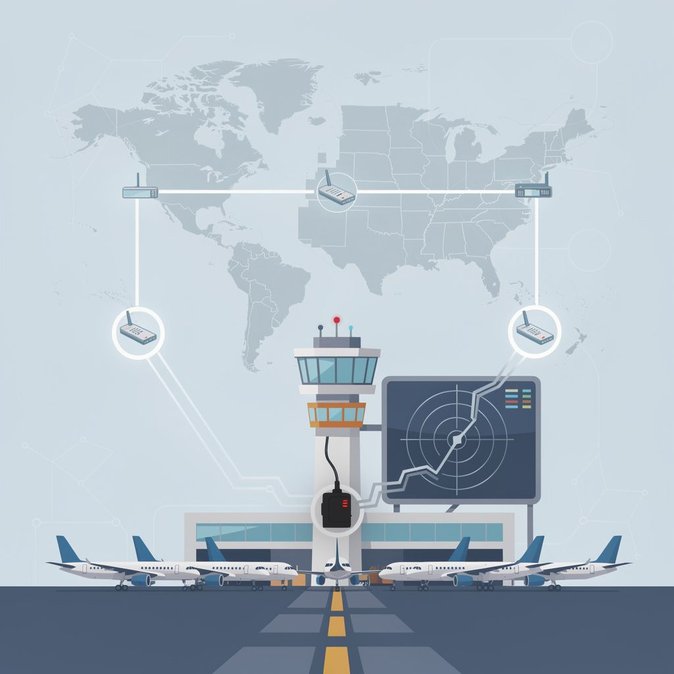
A forensic review launched this week into the November 13 FAA outage is shining a spotlight on dated telecommunications infrastructure that also underpins Canada’s own air-traffic systems. Preliminary findings reported by Axios reveal that a failed router with no hot-swap redundancy triggered cascading failures across 22 data centres. Nav Canada uses many of the same legacy circuits for cross-border radar and flight-plan coordination. Industry analysts say that if a similar failure occurred on the Canadian side, domestic flights could be grounded because U.S. controllers would be unable to accept hand-offs in shared airspace, including the busy Cleveland and Boston areas under the North Atlantic Tracks. Transport Minister Pablo Rodriguez told reporters that Ottawa is accelerating a C$1.2-billion modernization program originally slated for 2027-2031. Measures under consideration include installing dual active routers at all flight-data exchange nodes and establishing an “air-bridge” protocol that would let Canadian flights transit U.S. airspace under procedural separation when surveillance links fail. For global mobility teams, the review underscores the importance of monitoring infrastructure risk—not just airline finances—when drafting travel-risk policies. Organisations with time-critical travel (mining, film production, oil-and-gas shutdowns) should map alternate routings that avoid U.S. centers or secure private-aviation contingencies. The FAA will publish an interim report within 30 days; Nav Canada is expected to release its corresponding risk-assessment shortly thereafter.
Source: Axios