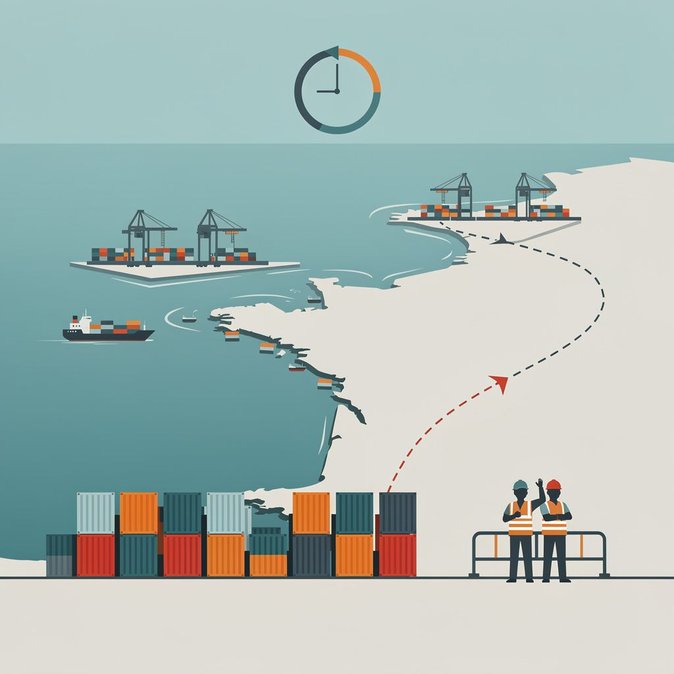
France’s two largest Atlantic container gateways – Le Havre and Rouen – are at a stand-still today after CGT-affiliated dockers walked out for a 24-hour stoppage that began at 00:01 on Tuesday, 17 November 2026. FleetIntel alerts issued late on Monday warned shipping lines that no vessels would be worked and that truck gates would remain closed for the duration of the action. The CGT is demanding accelerated wage talks following the publication of October inflation figures and has accused port employers of “hiding behind the 2027 presidential campaign” to delay negotiations. The shutdown comes at the height of the pre-Christmas import rush. Le Havre moves roughly 50 percent of France’s deep-sea container volumes and is the main maritime outlet for the greater Paris region. Forwarders estimate that around 22,000 TEU of boxes – including automotive parts, wine and spirits exports and temperature-controlled pharma consignments – will be delayed. Rail shuttle operator Naviland Cargo has already cancelled today’s round-trip block trains to Lyon and Strasbourg. Although the strike is limited to 24 hours, the port authority says it could take up to three days to clear the resulting vessel queue, warning of possible schedule knock-on effects at Antwerp and Hamburg where diverted cargo will add to berth congestion. Shipping line CMA CGM has issued a customer advisory announcing a "no-show" waiver and free time extensions for containers caught in the stoppage. Inland logistics are also feeling the pain. Hauliers serving Renault’s Sandouville plant report that time-critical import components are stranded on the quay; the OEM says it may have to slow assembly lines if box deliveries are not cleared by Thursday morning. Supply-chain managers are again reminded of the vulnerability of northern French gateways, which have seen six work stoppages in as many months. Companies with just-in-time flows into France are advised to activate contingency routings via Antwerp, Zeebrugge or Fos-sur-Mer where capacity is still available. Multinationals should also check insurance clauses – most transport contracts treat strikes as a force-majeure event, shifting the cost of storage and diversion onto the cargo owner.
Source: FleetIntel Road & Ports Alerts