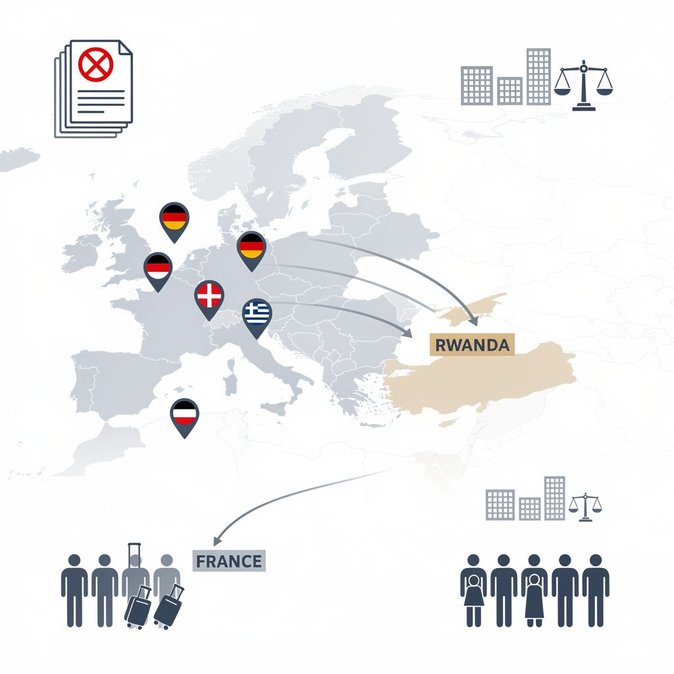
In a highly-symbolic ceremony in Vienna on 16 November, Germany, Austria, Denmark, Greece and the Netherlands signed a memorandum to create a pilot “return hub” in Rwanda where asylum-seekers who are finally refused protection in their territory will be transferred for removal processing. The plan revives a concept first floated by Denmark in 2021 and mirrors—on a multilateral scale—the bilateral deals previously pursued by the United Kingdom and Italy. If the project goes ahead, EU states that join the scheme would charter flights to Kigali and outsource detention, identity checks and the organisation of onward removals to the Rwandan authorities and international agencies on the ground. Participating governments argue that the hub will deter irregular secondary movements inside Schengen, speed up deportations, and ease political pressure created by crowded reception systems. France, however, made a point of distancing itself. Interior Minister Gérald Darmanin told reporters that “outsourcing our sovereign responsibility to third countries is not compatible with French constitutional principles nor with our obligation to guarantee due-process rights on our soil.” Paris has instead doubled down on bilateral readmission talks with North-African partners and on beefing-up controls at the Channel coast. For mobility and immigration managers the divide is significant. Clients whose mobile workforce could be affected by return procedures will face a much more heterogeneous enforcement landscape inside the EU. Employees denied protection in the five participating countries may find themselves quickly transferred to Rwanda, while those refused in France will still be held in mainland detention centres pending removal. Corporations should therefore map where staff file asylum claims and monitor distinct procedural timelines. Practically, the French opt-out also means no change to existing carrier-sanction rules or to the “foreseeable risk” checklist that airlines must run before boarding third-country nationals on France-bound flights. Yet the political signal underscores Paris’ tougher rhetoric since the summer election gains of the far-right: although it rejects offshore hubs, the government is keen to demonstrate that it remains firm on enforcement at home. Mobility stakeholders should prepare for stricter document checks on cross-Channel ferries and during rail spot controls in the weeks ahead.
Source: Le Monde