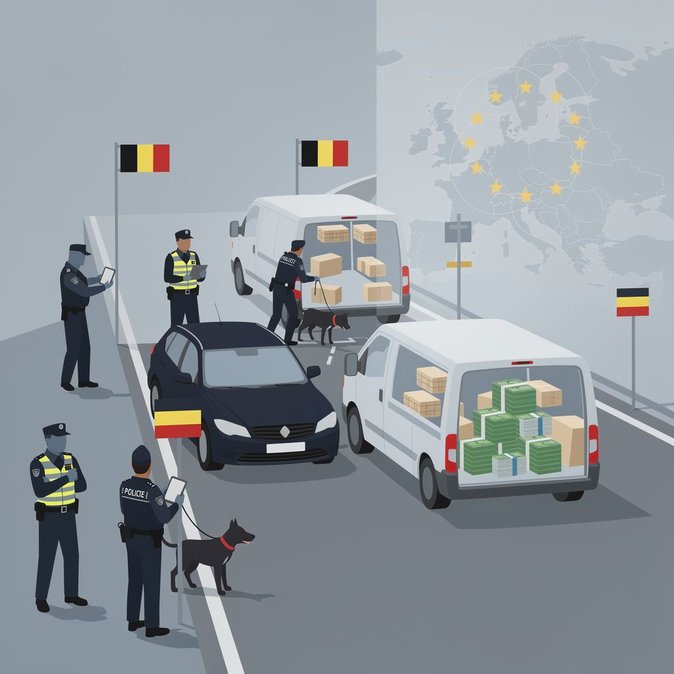
Belgium played a prominent role in the 24-nation “Victor Romeo” action day coordinated by Europol and Frontex to uncover professionally built hiding places in cars, vans and lorries. Details released on 17 November show that Belgian federal and local police, customs and forensic ‘conceal-space’ experts deployed across all provinces, feeding real-time intelligence to a national hub in Brussels linked to Europol headquarters in The Hague. Across Europe, officers discovered 11 sophisticated concealments, seizing more than 400 kg of cocaine, 28 kg of heroin, 32 weapons and €155,000 in cash. Belgian teams alone intercepted a foreign-registered car in Brussels-West with a factory-quality hide and a second vehicle on the A12 near Antwerp containing 3.5 kg of heroin and €28,000. Thirty-two people were arrested continent-wide and three organised-crime investigations opened. Why it matters for mobility professionals: vehicles used for international assignments, project logistics or executive roadshows are increasingly subject to forensic inspection when transiting Belgian ports and road corridors. Companies operating pooled cars or shipping household goods must ensure strict chain-of-custody procedures; negligence could expose firms to criminal liability if illicit compartments are discovered. Insurers in Brussels have already signalled premium hikes for high-value mobile assets that cross EU borders by road. The operation also demonstrates how the EU’s EMPACT platform is merging customs, border-control and police competencies—blurring traditional lines between immigration compliance and anti-smuggling work. Mobility teams should expect more multi-agency stops where officers inspect both cargo and passenger documents, and should brief drivers about expanded search powers. Belgium will submit a lessons-learned paper to the Justice and Home Affairs Council in December, with recommendations for mandatory conceal-detection training for Schengen border guards.
Source: Belgian Federal Police