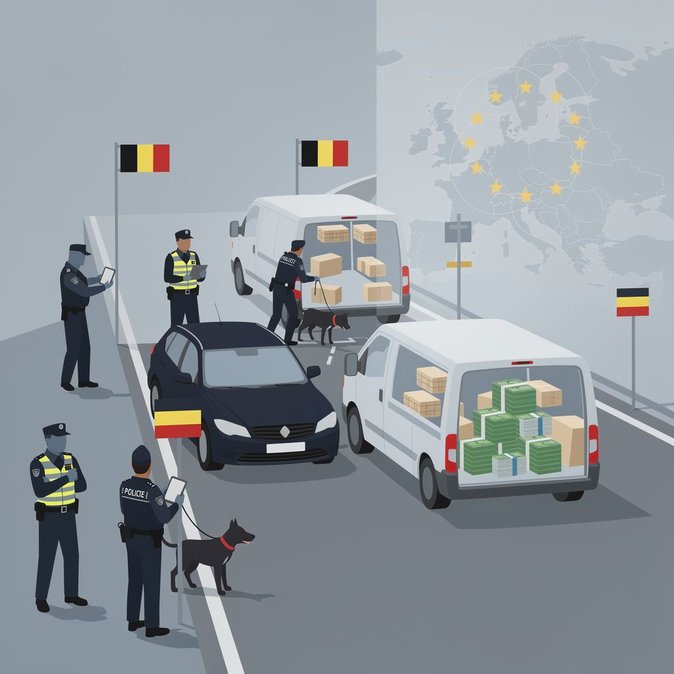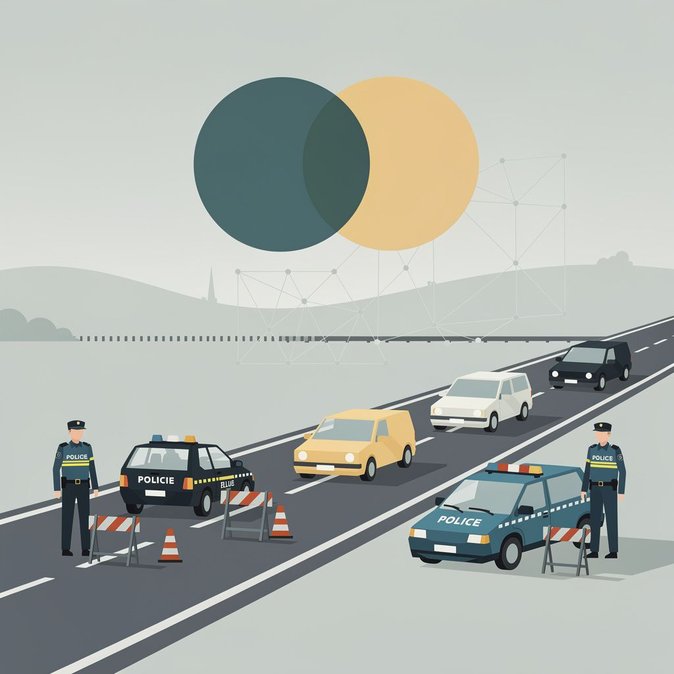
Belgian and French law-enforcement agencies carried out a large-scale joint operation dubbed “FUTURE” along the 620-kilometre land border on 17 November. The action, announced by the Belgian Federal Police on 18 November, mobilised local police zones from West Flanders and Hainaut, highway patrols, canine and aerial support teams, immigration-office officers and their French counterparts. A temporary command centre was set up in the Tournai Police & Customs Co-operation Centre to ensure real-time data-sharing, mirroring the fast-track information flows corporate security departments now expect when staff cross Schengen’s increasingly fragmented internal borders. Although the stated aim was to tackle cross-border petty crime, the operational focus on transit migrant smuggling reflects employers’ growing duty of care: cross-channel “small-boats” networks have shifted towards coastal pick-up points in northern France and Belgium, exposing business travellers and international assignees to ad-hoc road checks and traffic delays. Belgian officers inspected 406 vehicles and 279 individuals, issuing eight criminal reports (for drugs and prohibited weapons) and 17 road-traffic fines; seven immediate driving-licence suspensions were imposed and two wanted persons were detained. One foreign national was arrested for irregular stay, underlining Belgium’s stricter stance ahead of its 2027 EU Council presidency. For mobility managers the practical impact is twofold. First, the operation signals that pop-up police filters on the E17, A16 and E40 corridors will remain a fact of life, requiring extra buffer time in car-hire policies and shuttle services. Second, it shows deeper Franco-Belgian data integration: officers used live feeds to cross-reference number plates and ID documents against both countries’ police and immigration systems, accelerating checks but also increasing the risk of inadvertent detentions when travellers carry old passports. Corporates should therefore update travel-risk communications and verify that posted-worker notifications include current document numbers. The FUTURE action also pilots a new evaluation grid jointly developed by both interior ministries to measure deterrence against migrant smuggling; results will feed into Schengen Council discussions on proportionality of internal checks. If the grid proves successful, similar one-day “surge” controls could be scheduled quarterly, particularly around major events such as Euro 2028 matches in Brussels and Lille. Employers should monitor official calendars and coordinate with local transport providers to reroute staff coaches and project-cargo convoys when wave controls are announced.
Source: Belgian Federal Police