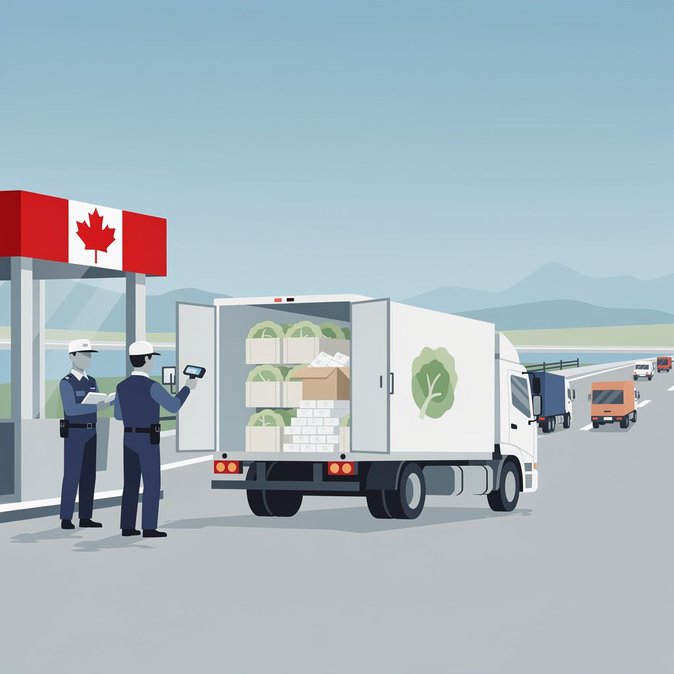
The Canada Border Services Agency (CBSA) announced on 18 November that officers seized 81 kilograms of cocaine hidden among boxes of romaine lettuce in a commercial truck arriving from the United States at the Pacific Highway crossing in Surrey, British Columbia. The 23 October interception followed a paperwork irregularity that triggered a secondary examination, during which officers discovered two duffel bags containing 65 bricks of the drug. The driver was arrested on site and the case transferred to the Royal Canadian Mounted Police. CBSA officials said the bust demonstrates increased use of risk-based targeting and X-ray imaging technology at land crossings frequented by produce hauliers. The agency has stepped up inspections amid U.S. pressure to curb north-south flows of fentanyl precursors and other narcotics. While the incident involves criminal activity, it carries practical implications for corporate supply-chain managers and business travellers moving goods and equipment across the border. Enhanced screening can lengthen wait times—particularly for southbound returns where trucks are re-examined—and operators should build additional buffer into just-in-time logistics schedules. Companies that self-certify cargo under trusted-trader programs (C-TPAT, PIP) are unlikely to face additional compliance burdens, but CBSA cautions that “trusted does not mean exempt.” Mobility teams arranging cross-border project moves should therefore ensure commercial paperwork is immaculate and that drivers can answer detailed cargo questions to avoid delays. The seizure also underscores Ottawa’s broader border-modernisation agenda, including expanded deployment of predictive analytics to target high-risk shipments—an initiative that ultimately aims to create smoother, corridor-style processing for compliant carriers.
Source: Global News